Sep 24, 2025
 Page Views:2128


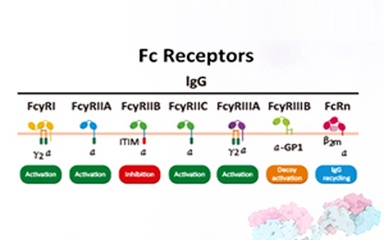
In the development of therapeutic antibodies, the fragment crystallizable (Fc) region is far more than just a "antigen-binding aid"—it acts more like the antibody’s "functional control center." Through precise interactions with Fc gamma receptors (FcγRs, encompassing both activating and inhibitory subtypes) and the neonatal Fc receptor (FcRn), the Fc domain mediates four core biological functions that define an antibody’s therapeutic value: antibody-dependent cellular cytotoxicity (ADCC), antibody-dependent cellular phagocytosis (ADCP), complement-dependent cytotoxicity (CDC), and regulation of antibody serum half-life. It is based on this core mechanism that Fc engineering has gradually evolved into the "engine" of therapeutic antibody development—it enables precise modulation of immune effector functions, optimization of pharmacokinetic (PK) properties, and even reshaping of target cell engagement patterns. Ultimately, this enhances therapeutic efficacy while minimizing the risk of adverse effects, opening new avenues to address unmet clinical needs in complex diseases.
This overview will systematically outline the three core directions of Fc engineering. It will not only delve into the mechanism of action for each strategy but also integrate preclinical validation data and cases of approved drugs to connect technical principles with real-world applications. Additionally, we will highlight key tools that support Fc function evaluation, providing researchers with a complete reference framework from "theoretical design" to "experimental validation."

Figure1. Safety-relevant aspects of enhanced Fc-effector function created in https://biorender.com (A) IgG structure indicating locations of critical immune receptor / ligand interactions. (B) Complement related killing and immune cell activation. (C) IgG binding to FcRn in endothelial, macrophages and other cells prolongs IgG half-life and hence exposure to its pharmacological activity potentially increasing the risk of pharmacology-associated toxicity. (D). Receptor clustering driven directly by Ab format engineering or facilitated in trans by CD32b on a neighbouring cell can lead to receptor signalling and hence cell activation or inhibition, depending on receptor biology and cellular context. (E) Cellular killing mechanisms effected through FcγRIIIa on NK cells (ADCC) or primarily FcγRIIa on phagocytic cells (ADCP). (F) IgG aggregates or target antigen related immune-complexes can activate FcγR resulting in ‘off-target’ / ‘off biology’ related immune mediator / cytokine release toxicology.
Major Directions of Fc Engineering
The design logic of Fc engineering always centers on "therapeutic goals": when tumor cells or pathogenic immune cells need to be eliminated, Fc effector functions should be enhanced; when excessive immune activation must be avoided, Fc effector functions should be silenced; while extending antibody half-life or directly blocking Fc receptor-mediated pathological processes represent two other critical optimization strategies. Though each of these four directions has distinct focuses, together they form the technical framework of Fc engineering.
I. Effector Function Enhancement or Silencing: Precisely Regulating Immune Clearance Capacity
The "enhancement" and "silencing" of effector functions are the most fundamental and core strategies in Fc engineering. They correspond to two diametrically opposed therapeutic scenarios—"needing to activate immune clearance" and "needing to inhibit immune responses"—and their technical pathways have been validated by numerous clinical studies.
1. Enhancing Fc Effector Functions: Activating the "Killing Potential" of Immune Cells
Enhancing Fc-mediated effector activity is a core strategy in cancer therapy and certain autoimmune diseases (where pathogenic cells need to be cleared). Currently, two technologies have become the "gold standards" in this field and have been successfully translated into multiple approved drugs.
• Glycoengineering: Optimizing Fc Function Through "Glycan Structure Modification" The Asn297 site in the CH2 domain of the Fc region contains a highly conserved N-glycosylation modification. This seemingly small glycan chain is actually the "key switch" for Fc binding to FcγRs and C1q. Under natural conditions, over 90% of Fc glycans in human IgG contain core fucose; modifying this glycan structure can directly alter Fc effector function:
Afucosylation: This is the most clinically successful glycoengineering strategy to date—by knocking out the FUT8 gene (responsible for fucose synthesis) in CHO cells or using naturally low-fucose producer cell lines, core fucose can be completely removed from Fc glycans. This modification increases the binding affinity of Fc to the activating receptor FcγRIIIA by (effective for both F158 and V158 allotypes), thereby enhancing NK cell-mediated ADCC activity. Clinically, this technology has become a "standard feature" for anti-CD20, anti-HER2, and other anti-tumor antibodies. For example, Obinutuzumab (used in chronic lymphocytic leukemia) and Margetuximab (used in HER2-positive metastatic breast cancer) both achieved therapeutic breakthroughs through afucosylation.
Supplementary Glycan Modifications: Beyond afucosylation, adjusting other components of the glycan chain can also optimize effector function. For instance, increasing galactose content in Fc glycans enhances Fc binding to FcγRIIA/IIIA and C1q, boosting ADCP and CDC activity. Introducing "bisecting GlcNAc" via overexpression of β1,4-N-acetylglucosaminyltransferase III (GnTIII) stabilizes Fc-FcγRIIIA interactions, increasing ADCC activity by. Such modifications often serve as "complementary strategies" to afucosylation, further amplifying the killing effect of antibodies.
• Site-Directed Mutagenesis: Reshaping Fc Conformation Through "Amino Acid Modification"
If glycoengineering is about "modifying the external glycan chains of Fc," site-directed mutagenesis is about "optimizing the internal structure of Fc"—by introducing specific amino acid mutations into the CH2/CH3 domains of Fc, the "structural interface" for Fc-receptor binding can be directly altered, enabling precise regulation of effector function. Currently, multiple mutation combinations have passed preclinical validation, with some advancing to clinical stages:
- S239D/A330L/I332E (DLE mutation): Adding the A330L mutation to the DE backbone optimizes the Fc-FcγRIIIA binding interface, significantly increasing affinity for the FcγRIIIA V158 allotype and ADCC activity, making it ideal for scenarios demanding higher effector function like solid tumor therapy.
- E345K/E430G mutation: This set of mutations has a unique mechanism of action—it promotes the formation of "Fc hexamers" after antibodies bind to target antigens. Hexamerized Fc recruits complement component C1q more efficiently, activating the classical complement pathway. In preclinical models, CDC activity can be enhanced, offering a new optimization direction for antibodies relying on complement-mediated killing (e.g., anti-CD20 antibodies).
- Q311R/M428E/N434W (REW mutation): This is a "multifunctional mutation"—it enhances CDC activity by promoting Fc hexamerization while extending antibody half-life by optimizing FcRn binding sites. This achieves the dual goal of "efficacy enhancement" and "PK optimization," providing new ideas for multi-dimensional antibody optimization.

Fc substitutions increasing FcγR binding.
2. Silencing Fc Effector Functions: Avoiding "Off-Target Damage" from Immune Responses
Unlike cancer therapy, antibodies targeting autoimmune or inflammatory diseases often need to "block pathological signals" rather than "activate immune clearance"—in such cases, "silencing" Fc effector functions becomes critical. This prevents antibodies from accidentally activating immune cells or the complement system, reducing damage to healthy tissues.
Key Strategies for Fc Silencing
• Targeted Amino Acid Mutations
These mutations directly disrupt the structural interface between Fc and FcγRs/C1q, eliminating unwanted effector activity while preserving antigen binding. Three well-validated mutation sets dominate clinical development:
- L234A/L235A (LALA): Weakens Fc binding to all FcγRs and C1q (100–1000× lower affinity) while preserving antigen specificity; widely used in IgG1 backbones (e.g., Atezolizumab) to avoid T cell depletion.
- L234A/L235A/P329G (LALA-PG): Builds on LALA to further reduce C1q binding, ideal for complement-sensitive molecules like bispecific antibodies (e.g., Glofitamab).
• IgG4 Isotype Optimization: Leveraging "Naturally Low-Activity Isotypes" to Reduce Risk
In addition to mutagenesis, selecting the naturally low-effector IgG4 isotype is another important approach to achieve Fc silencing. IgG4 itself has weak binding to FcγRs and C1q, but it has a critical flaw: it easily undergoes "Fab arm exchange" in vivo, leading to unstable antibody function. To address this, researchers typically introduce the S228P mutation into the IgG4 hinge region—this stabilizes hinge disulfide bonds, completely blocking Fab arm exchange. For further silencing, IgG4-S228P can be combined with the LALA mutation (e.g., the anti-IL-6R antibody sirukumab) to eliminate residual FcγR binding.
Critical Consideration: Some silencing mutations (e.g., N297A) may slightly impact antibody thermal stability or FcRn binding. Therefore, during lead optimization, techniques such as differential scanning calorimetry (DSC) and SPR should be used to evaluate these properties, ensuring a balance between silencing efficacy, antibody stability, and half-life.

Fc amino acid substitutions ablating FcγR binding
II. Extending Half-Life via FcRn Optimization: Enhancing the "Clinical Utility" of Antibodies
An antibody’s serum half-life impacts dosing frequency and patient compliance, and it is regulated (not determined) by the neonatal Fc receptor (FcRn). FcRn works pH-dependently: it binds IgG in acidic endosomes (pH 5.5–6.0) to avoid lysosomal degradation, then releases IgG into neutral blood (pH 7.4). Fc engineering targeting FcRn typically aims to extend half-life (for better convenience), though it can also adjust half-life for specific needs.
1. Extending Half-Life via FcRn Optimization
Most efforts focus on boosting acidic pH Fc-FcRn binding, with three validated mutation sets—their effects depend on factors like antibody type and target:
- LS (M428L/N434S, Xtend™): Boosts hFcRn binding 11.3-fold at pH 6.0. Used in Ravulizumab (anti-C5 for PNH), extending half-life to ~50 days (4 x longer than eculizumab) (Lee et al., 2008; Peffault de Latour et al., 2018).
- N434H: Modestly boosts FcRn affinity ~3-fold, typically lowering clearance by ~50% in monkeys (Petkova et al., 2006; Valente et al., 2020). Tested in anti-CD4 antibody MTRX1011A (autoimmune diseases) to potentially reduce dosing, but clinical half-life depends on patient factors.”
Notably, these mutations may compromise FcγR interactions and immune functions (e.g., YTE reduces ADCC activity), requiring balanced design. Additionally, FcRn binding affinity differs across species—human FcRn transgenic mice are preferred for preclinical pharmacokinetic (PK) studies to avoid inaccurate predictions.
III. Direct Blockade of FcγRs and FcRn: Opening New Therapeutic Pathways for "Receptor Targeting"
This strategy uses recombinant Fc fragments or multimers to competitively bind FcγRs/FcRn, blocking pathogenic IgG from interacting with these receptors—mainly for autoimmune diseases. It addresses IVIG’s limitations (limited supply, high cost, long infusions) with targeted recombinant alternatives.
For FcγR blockade, multivalent Fc formats (e.g., IgG1 Fc hexamers, IgG4 Fc trimers) bind FcγRs avidly to inhibit ADCC/ADCP. IgG1 hexamers may trigger platelet activation or cytokine release, while IgG4-based ones reduce such risks and protect mice from autoimmune models (e.g., ITP); note that mice/NHPs lack human FcγRIIIB, limiting data translatability.
For FcRn blockade, engineered Fc fragments (e.g., efgartigimod, approved for gMG) have mutations (e.g., MST-HN) boosting FcRn binding at acidic pH. This occupies FcRn, preventing pathogenic IgG recycling and accelerating its degradation, with clinical data showing effective IgG reduction and good safety.
Conclusion
Fc engineering is a cornerstone of antibody drug development, enabling precise modulation of immune functions and pharmacokinetics. Different therapeutic applications call for tailored Fc designs:
- Silenced Fc for immune regulation and inflammatory control
- Extended half-life Fc for improved dosing convenience and patient compliance By leveraging advanced protein and glycan engineering techniques, developers can significantly improve therapeutic index and clinical outcomes.
Featured Product Line: High-Performance Fc Receptor Tools—The "Experimental Cornerstone" Supporting Fc Engineering
The precise implementation of the aforementioned Fc engineering strategies relies on reliable experimental tools—only with high-quality Fc receptor tools can the binding affinity, effector function, and PK properties of engineered Fc be accurately evaluated. To meet this demand, we have developed a comprehensive portfolio of Fc receptor tools, including:
TR-FRET binding assay kits
Fc receptor Functional cell lines
Validated ADCC/ADCP reporter cell-lines
All products are validated by orthogonal methods (surface plasmon resonance/SPR, biolayer interferometry/BLI, size exclusion chromatography-multi-angle light scattering/SEC-MALS, etc.) to ensure data reliability and reproducibility.

>> Learn More About Our Fc Receptor Collections
References:
1. Brennan FR, Polli JR, Sathish J, Ramones M, et, al. Impact of antibody Fc engineering on translational pharmacology, and safety: insights from industry case studies. MAbs. 2025 Dec;17(1):2505092. doi: 10.1080/19420862.2025.2505092. Epub 2025 Jul 7. PMID: 40624840; PMCID: PMC12239809.
2. Dall’acqua WF, Kiener PA, Wu H. Properties of human IgG1s engineered for enhanced binding to the neonatal Fc receptor (FcRn). J Biol Chem. 2006;281(33):23514–23524. doi: 10.1074/ jbc.M604292200 .
3. Grevys A, Bern M, Foss S, Bratlie DB, Moen A, Gunnarsen KS, Aase A, Michaelsen TE, Sandlie I, Andersen JT. Fc engineering of human IgG1 for altered binding to the neonatal fc receptor affects fc effector functions. J Immunol. 2015;194(11):5497–5508. doi: 10. 4049/jimmunol.1401218
4. Lee J-W, Bachman ES, Aguzzi R, Jang JH, Kim JS, Rottinghaus ST, Shafner L, Szer J. Immediate, complete, and sustained inhibition of C5 with ALXN1210 reduces complement-mediated hemolysis in patients with paroxysmal nocturnal hemoglobinuria (PNH): interim analysis of a dose-escalation study. Blood. 2016;128 (22):2428–2428. doi: 10.1182/blood.V128.22.2428.2428 . 109. Mackness BC, Jaworski JA, Boudanova E, Park A, Valente D,
5. Peffault de Latour R, Bucher C, Jahreis A, Klughammer B, Biedzka-Sarek M, Jordan G, Shinomiya K, Anzures-Cabrera J, Gentile B, Dieckmann A, et al. The complement C5 inhibitor crovalimab in paroxysmal nocturnal hemoglobinuria. Blood. 2020;135(12):912–920. doi: 10.1182/blood.2019003399

![[Latest Research] Mechanism of Transferrin in Promoting Fatty Acid Oxidation and Liver Tumor Growth](https://console.acrobiosystems.com/public/uploads/image/1742798080168012766.jpg)