

Human FGF-9 Protein, His Tag

Customer Reviews
Cat. No. / Size
Price
Qty
FG9-H52H3-100ug
$410.00
FG9-H52H3-1mg (500ug X 2)
$2885.00
ETA of in-stock products:2 business days

Product Details

  • Synonyms

    FGF9, GAF, HBFG-9, MGC119914, MGC119915, SYNS3

  • Source

    Human FGF-9, His Tag (FG9-H52H3) is expressed from human 293 cells (HEK293). It contains AA Leu 4 - Ser 208 (Accession # P31371-1).

    Predicted N-terminus: His

    Request for sequence
  • Molecular Characterization

    FGF-9 Structure

    Other Tags and Version Biotin & Other Labeled Version

    This protein carries a polyhistidine tag at the N-terminus.

    The protein has a calculated MW of 25 kDa. The protein migrates as 29-30 kDa under reducing (R) condition (SDS-PAGE) due to glycosylation.

  • Endotoxin

    Less than 1.0 EU per μg by the LAL method / rFC method.

  • Purity

    >90% as determined by SDS-PAGE.

  • Formulation

    Lyophilized from 0.22 μm filtered solution in PBS with trehalose as protectant.

    Contact us for customized product form or formulation.

  • Reconstitution

    Please see Certificate of Analysis for specific instructions.

    For best performance, we strongly recommend you to follow the reconstitution protocol provided in the CoA.

  • Storage

    For long term storage, the product should be stored at lyophilized state at -20°C or lower.

    Please avoid repeated freeze-thaw cycles.
    This product is stable after storage at:

    1. -20°C to -70°C for 12 months in lyophilized state;
    2. -70°C for 3 months under sterile conditions after reconstitution.
  • ACRO Quality Management System

    1. QMS(ISO, GMP)
    2. Quality Advantages
    3. Quality Control Process

Customers Also Viewed

Performance Data

  • SDS-PAGE

    FGF-9 SDS-PAGE

    Human FGF-9, His Tag on SDS-PAGE under reducing (R) condition. The gel was stained with Coomassie Blue. The purity of the protein is greater than 90%.

  • Bioactivity-ELISA

     FGF-9 ELISA

    Immobilized Human FGF-9, His Tag (Cat. No. FG9-H52H3) at 5 μg/mL (100 μL/well) can bind Human FGF R2 (IIIb), Fc Tag (Cat. No. FGB-H5256) with a linear range of 0.005-0.625 μg/mL (QC tested).

    Protocol
  • Bioactivity-BLI

     FGF-9 BLI

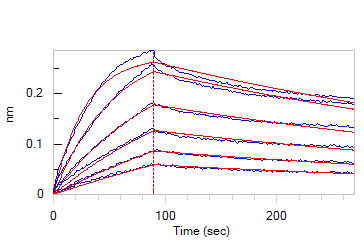
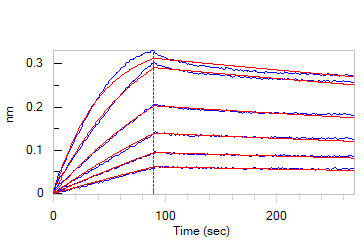
    Loaded Human FGF R2 (IIIb), Fc Tag (Cat. No. FGB-H5256) on Protein A Biosensor, can bind Human FGF-9, His Tag (Cat. No. FG9-H52H3) with an affinity constant of 119 nM as determined in BLI assay (ForteBio Octet Red96e) (Routinely tested).

    Protocol
  •  FGF-9 BLI

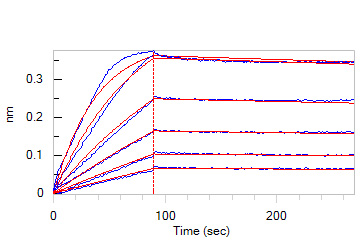
    Loaded Human FGF R3 (IIIb), Fc Tag (Cat. No. FGB-H5259) on Protein A Biosensor, can bind Human FGF-9, His Tag (Cat. No. FG9-H52H3) with an affinity constant of 69.3 nM as determined in BLI assay (ForteBio Octet Red96e) (Routinely tested).

    Protocol
  •  FGF-9 BLI

    Loaded Human FGF R3 (IIIc), Fc Tag (Cat. No. FGC-H5256) on Protein A Biosensor, can bind Human FGF-9, His Tag (Cat. No. FG9-H52H3) with an affinity constant of 19.4 nM as determined in BLI assay (ForteBio Octet Red96e) (Routinely tested).

    Protocol
  •  FGF-9 BLI

    Loaded Human FGF R4, Fc Tag (Cat. No. FG4-H5253) on Protein A Biosensor, can bind Human FGF-9, His Tag (Cat. No. FG9-H52H3) with an affinity constant of 120 nM as determined in BLI assay (ForteBio Octet Red96e) (Routinely tested).

    Protocol

Customer Reviews
Writing Reviews

Background

Fibroblast growth factor 9 is also known as FGF9, GAF, HBFG-9, SYNS3, and is a member of the fibroblast growth factor (FGF) family. FGF family members possess broad mitogenic and cell survival activities, and are involved in a variety of biological processes, including embryonic development, cell growth, morphogenesis, tissue repair, tumor growth and invasion. FGF9 is also a mitogen for oligodendrocyte type 2 astrocyte progenitor cells, smooth muscle cells, pheochromocytoma PC12 cells, and BALB/3T3 fibroblasts. However, unlike FGF acidic and basic, FGF9 has no effect on human umbilical vein endothelial cells, and it has been demonstrated that FGF9 binds preferentially to the IIIc form of FGFR3. Although no typical signal sequence was found in FGF9, it is secreted efficiently after synthesis not in a conventional manner. In nervous system, FGF9 is produced mainly by neurons and may plays an important role in CNS development. FGF9 has been shown to interact with Fibroblast growth factor receptor 3.

Recent Advances

 
Contact Us
Drug Candidate Licensing
More
  • Basic Product Information
  • Product Details
  • Customers Also Viewed
  • Performance Data
  • Customer Reviews
  • Background
Contact Us

[North America]: +1 800-810-0816
[Switzerland]: +41 800 040 012
[Asia & Pacific]: +86 400-682-2521

[North America]: 1 Innovation Way, Newark, DE 19711, USA
[Switzerland]: ACRObiosystems AG, c/o Zug Dammstrasse Centre AG, Dammstrasse 19, 6300 Zug Switzerland