


 Aug 20, 2026
 Page Views:517


Introduction
The 2014 Ice Bucket Challenge brought amyotrophic lateral sclerosis (ALS), commonly known as Lou Gehrig’s disease, into the global spotlight. Despite the surge in public awareness and research interest that followed, ALS remains one of the most challenging neurodegenerative diseases to treat. Patients typically remain cognitively aware while progressive degeneration of motor neurons gradually leads to muscle weakness, paralysis, and ultimately respiratory failure. Effective therapeutic interventions remain a major unmet medical need.
A study published in Nature Aging in July 2026 may offer a new direction. Led by Professor Xinglong Wang at the University of Arizona, the research team moved beyond the conventional strategy of eliminating disease-associated proteins and instead explored how to selectively suppress the toxic properties of TDP-43. Their findings suggest that TDP-43 may not need to be removed entirely. By targeting a critical region responsible for its pathological activity, it may be possible to reduce its toxicity while preserving its essential physiological functions—opening a new avenue for ALS and other TDP-43–associated neurodegenerative diseases.
TDP-43: An Essential Protein with a Pathological Side
Under normal conditions, TDP-43 is predominantly localized in the nucleus, where it plays essential roles in RNA splicing, transport, and other processes required for neuronal function. However, in approximately 97% of ALS cases, TDP-43 pathology is characterized by its loss from the nucleus and accumulation in the cytoplasm, where it can form abnormal condensates and aggregates. These pathological changes disrupt neuronal homeostasis and have been linked to abnormalities in processes including mitochondrial function, ultimately contributing to motor neuron dysfunction and degeneration.
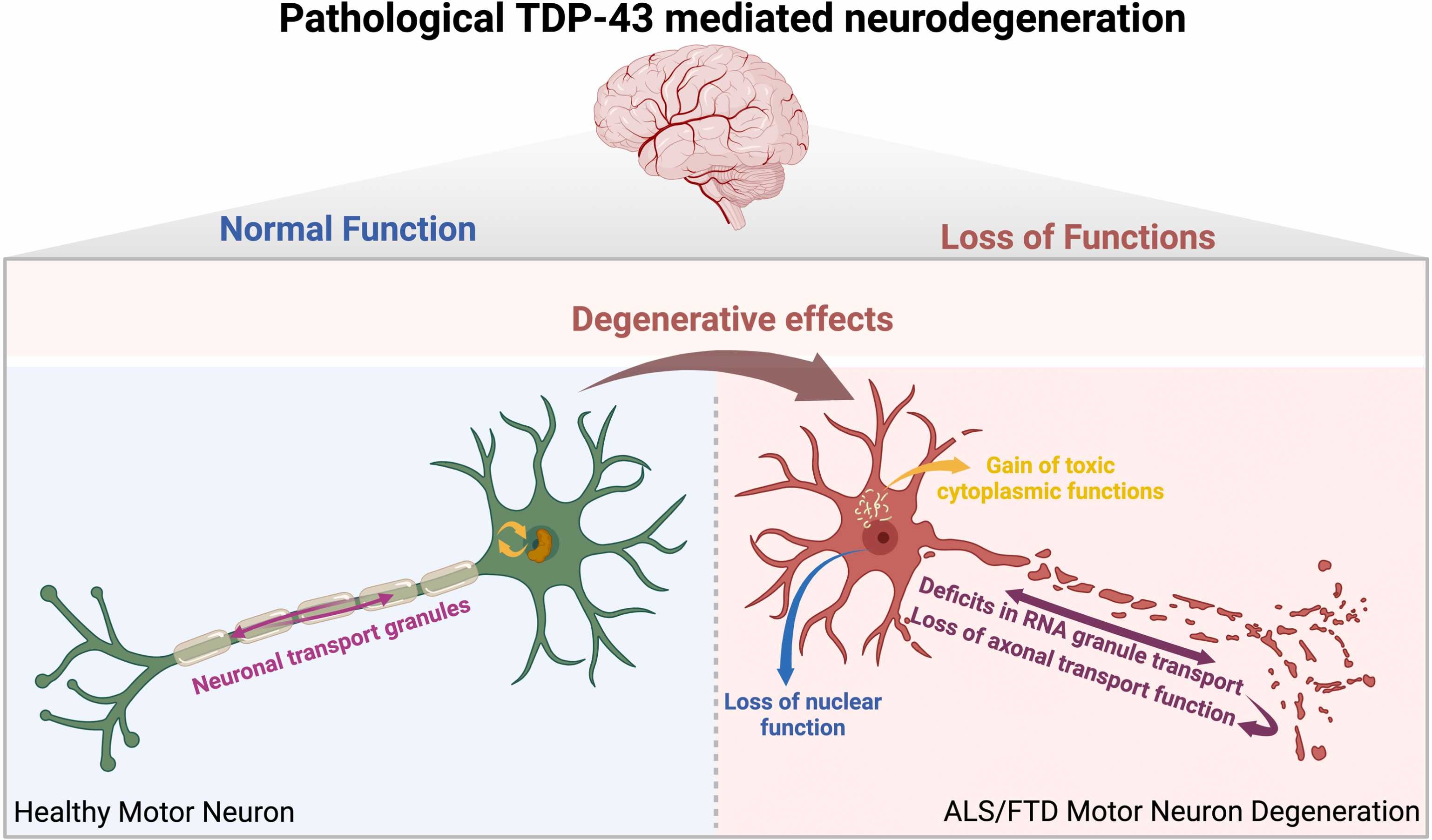
https://doi.org/10.1016/j.arr.2023.102085
Figure 1. TDP-43 pathology contributes to motor neuron dysfunction and degeneration.
The therapeutic challenge is therefore not simply to eliminate TDP-43. Because the protein is essential for normal neuronal function, indiscriminate depletion could also interfere with its physiological roles. This may help explain why approaches aimed at broadly targeting TDP-43 have faced significant challenges.
The Wang team proposed a different hypothesis: TDP-43 toxicity may be driven by specific regions of the protein rather than by the protein as a whole. If the pathological activity can be traced to a defined region, selectively targeting that region could potentially suppress toxicity while preserving the protein’s normal functions.
XL20: A Precision “Molecular Wrench” for Taming TDP-43 Toxicity
To test this hypothesis, the researchers systematically mapped the TDP-43 sequence and identified a critical pathogenic region within residues 320–340 of its C-terminal low-complexity domain (LCD). This evolutionarily conserved region appears to play a central role in pathological aggregation and toxicity, while many disease-associated TDP-43 mutations are also located within the LCD. Experiments in cells and mouse models showed that removing this toxic region substantially reduced neuronal apoptosis and alleviated ALS-related phenotypes, while the core RNA-splicing function of TDP-43 was not significantly impaired. These findings provided important evidence for the concept of “localized toxicity with preserved physiological function.”
With this pathogenic region identified as a potential therapeutic target, the team conducted a large-scale virtual screen of nearly 190,000 compounds and identified XL20, a small molecule capable of targeting the toxic region of TDP-43. XL20 offers two particularly notable features. First, it is able to cross the blood–brain barrier, allowing it to reach the central nervous system. Second, rather than eliminating TDP-43, XL20 is designed to selectively bind the toxic region and interfere with pathological aggregation and mislocalization while preserving the protein’s normal functions as much as possible. In animal models and patient-derived stem cell experiments, XL20 showed promising effects, including protection of motor neurons, improved motor performance, and prolonged survival in ALS-model mice. The findings also suggested that the compound may help reverse established neuronal damage, further supporting the potential of this targeted approach.
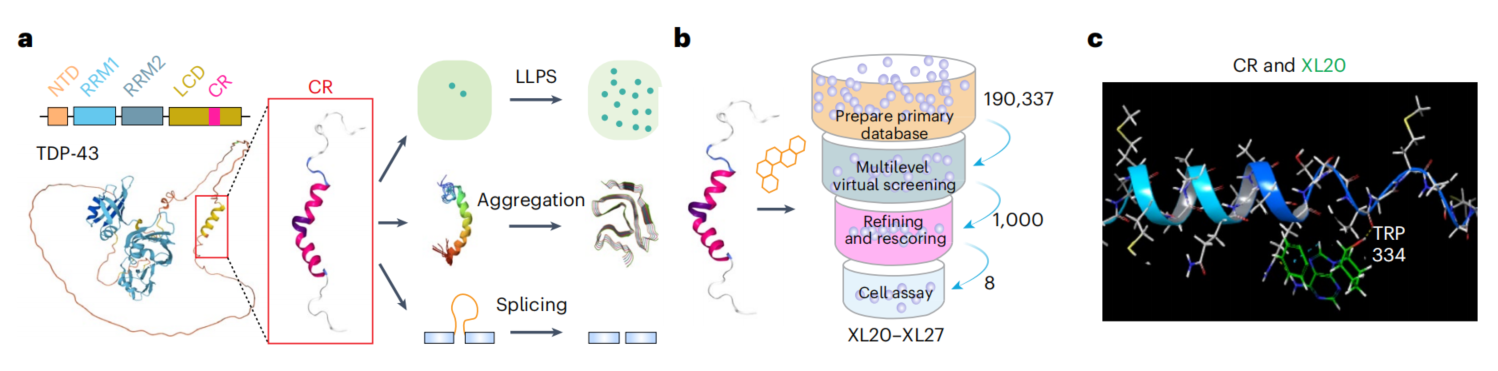
https://doi.org/10.1038/s43587-026-01166-3
Figure 2. Discovery of XL20 and its targeted interaction with TDP-43.
From Protein Clearance to Precision Regulation: A New Direction
The significance of this study extends beyond the identification of XL20 as a clinical candidate. It establishes a novel therapeutic philosophy for targeting TDP-43. Historically, neurodegeneration research has focused on reducing or removing misfolded proteins. However, for multifunctional proteins like TDP-43, a "scorched-earth" approach is untenable. The new strategy—"detoxify, don’t deplete"—demonstrates that selectively inhibiting the pathological behavior of a protein while preserving its physiological function is a viable and potentially safer path forward.
Given that TDP-43 pathology is also a hallmark of Alzheimer’s disease, Limbic-predominant Age-related TDP-43 Encephalopathy (LATE), and other dementias, this precision-targeting strategy holds promise for a broad range of neurodegenerative conditions.
Aneuro: Advance Neuroscience Research
From elucidating disease mechanisms to exploring diagnostic biomarkers and developing novel therapeutics, high-quality research tools are indispensable.
Aneuro, the neuroscience-focused brand of ACROBiosystems, provides a broad portfolio of research tools, including target proteins, pre-formed fibrils (PFFs), cell lines, and p-Tau antibodies. Through our rigorous quality standards and continuous innovation, we aim to provide researchers with reliable tools to accelerate the journey from mechanistic insight to effective therapies.
|
|
|
|

FAQ
Q1. Why is drug development for amyotrophic lateral sclerosis (ALS) so challenging?
A: ALS is a complex and heterogeneous neurodegenerative disease involving multiple pathological mechanisms, including motor neuron degeneration, abnormal protein aggregation, neuroinflammation, and impaired RNA metabolism. Unlike many diseases with a single well-defined pathological pathway, ALS can be driven by different molecular abnormalities across patients. Another major challenge is that disease-associated proteins such as TDP-43 also have essential physiological functions, making it difficult to eliminate pathological activity without disrupting normal cellular processes. In addition, many therapeutic candidates that show promising results in preclinical models have failed to demonstrate sufficient efficacy in clinical trials, highlighting the need for better disease models and more predictive drug development strategies.
Q2. What neurological diseases are associated with abnormal TDP-43 pathology?
A: TDP-43 pathology is most strongly associated with ALS and frontotemporal lobar degeneration (FTLD), but it is also observed in several other neurodegenerative diseases. For example, TDP-43 accumulation can occur in a subset of patients with Alzheimer’s disease and is a defining pathological feature of limbic-predominant age-related TDP-43 encephalopathy (LATE). Abnormal TDP-43 localization, aggregation, or loss of normal nuclear function may contribute to neuronal dysfunction in these conditions. Because TDP-43 pathology spans multiple neurodegenerative diseases, understanding how its abnormal behavior develops and spreads may provide broader insights into disease mechanisms and potential therapeutic strategies beyond ALS.
Q3. What proteins are commonly studied in ALS research?
A: TDP-43, SOD1, and FUS are three of the most widely studied proteins in ALS research. TDP-43 pathology is observed in the majority of sporadic ALS cases and is characterized by abnormal cytoplasmic accumulation and aggregation. SOD1 mutations are associated with a subset of familial ALS cases and have been extensively studied in genetic and animal models. FUS is another RNA-binding protein linked to familial ALS and abnormal protein aggregation. Recombinant forms of these disease-associated proteins can be used to investigate protein structure, aggregation, molecular interactions, and potential drug mechanisms, helping researchers study distinct molecular pathways underlying ALS.
Q4. How are recombinant proteins used in ALS and neurodegenerative disease research?
A: Recombinant proteins provide researchers with well-defined and reproducible materials for studying disease-associated proteins under controlled experimental conditions. In ALS research, proteins such as TDP-43, SOD1, and FUS can be used to investigate protein structure, aggregation, molecular interactions, and compound activity. Recombinant proteins are also useful for target validation, biochemical assay development, and screening of potential therapeutic molecules. When combined with cell-based or animal models, these assays can help connect molecular mechanisms with disease-related phenotypes. This multi-level approach enables researchers to evaluate candidate mechanisms more systematically before advancing promising compounds into more complex preclinical studies.
Q5. Why do some neurodegenerative drug candidates work in preclinical studies but fail in clinical trials? How can preclinical models be improved?
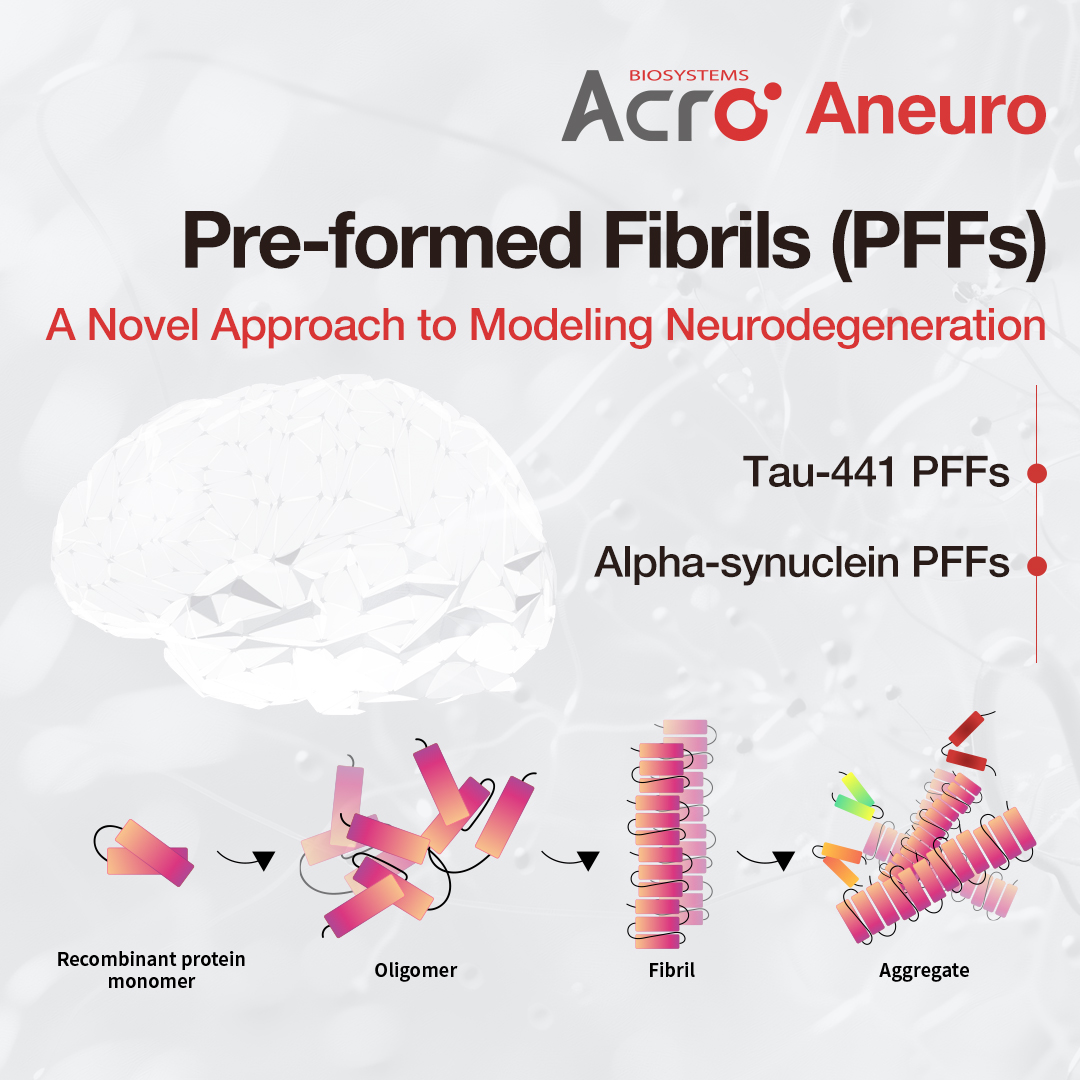
A: One important reason is that conventional animal models cannot fully reproduce the complexity and heterogeneity of human neurodegenerative diseases. In particular, they may not accurately capture the formation, propagation, and cellular effects of pathological protein aggregates. More disease-relevant models can improve the predictive value of preclinical studies. For example, pre-formed fibrils (PFFs) can be used to establish seed-induced models that better reproduce aspects of pathological protein propagation. For Tau-related research, Tau PFFs such as Aneuro Tau-441 PFFs can be used to investigate pathological spreading and downstream neuronal responses. Combining disease-relevant models with sensitive biomarkers such as phosphorylated Tau (p-Tau) can provide complementary evidence for evaluating drug efficacy and mechanism.
References
1. Gao J, Shukla D, Ding M, et al. Therapeutic targeting of the conserved region within the low-complexity domain of TDP-43 is neuroprotective and extends survival in amyotrophic lateral sclerosis mice[J]. Nature Aging, 2026: 1-17. https://doi.org/10.1038/s43587-026-01166-3
2. Babazadeh A, Rayner S L, Lee A, et al. TDP-43 as a therapeutic target in neurodegenerative diseases: Focusing on motor neuron disease and frontotemporal dementia[J]. Ageing Research Reviews, 2023, 92: 102085. https://doi.org/10.1016/j.arr.2023.102085