


Human Azurocidin / CAP37 / AZU1 Protein, His Tag

Cat. No. / Size
Price
Availability
Qty
AZ1-H5225-100ug
$270.00
AZ1-H5225-1mg (500ug X 2)
$1,625.00
AZ1-H5225
Sub-Total :
$ 0
Customize Product Request Quote
Contact Us
Contact Us
Sub-Total:
$ 0
  • Product Details
  • Performance Data
  • Reviews & Citations
  • Important Statement
  • Resources
Synonyms

AZU1, Azurocidin, HBP, AZAMP, AZU, CAP37, HUMAZUR, NAZC

Source

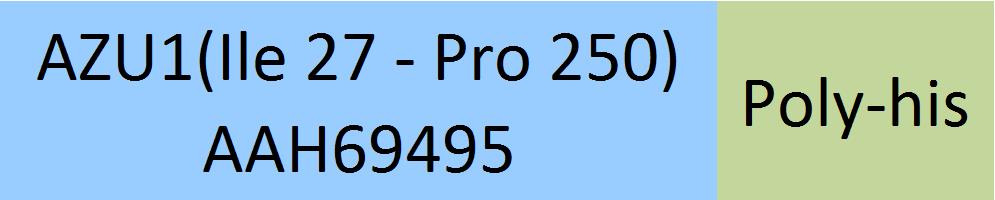
Human Azurocidin, His Tag (AZ1-H5225) is expressed from human 293 cells (HEK293). It contains AA Ile 27 - Pro 250 (Accession # AAH69495).

Predicted N-terminus: Ile 27
Molecular Characterization

This protein carries a polyhistidine tag at the C-terminus.

The protein has a calculated MW of 25.0 kDa. The protein migrates as 34-42 kDa under reducing (R) condition (SDS-PAGE) due to glycosylation.

Endotoxin

Less than 1.0 EU per μg by the LAL method / rFC method.

Purity

>95% as determined by SDS-PAGE.

Formulation

Lyophilized from 0.22 μm filtered solution in PBS, pH7.4 with trehalose as protectant.

Contact us for customized product form or formulation.

Reconstitution

Please see Certificate of Analysis for specific instructions.

For best performance, we strongly recommend you to follow the reconstitution protocol provided in the CoA.

Shipping and Storage

This product is shipped at ambient temperature.

For long term storage, the product should be stored at lyophilized state at -20°C or lower.

Please avoid repeated freeze-thaw cycles.

This product is stable after storage at:
  • -20°C to -70°C for 12 months in lyophilized state;
  • -70°C for 3 months under sterile conditions after reconstitution.

Background

Azurocidin (AZU1) is also known as Heparin-binding protein (HBP), Cationic antimicrobial protein CAP37, is a neutrophil granule-derived antibacterial and monocyte- and fibroblast-specific chemotactic glycoprotein. which belongs to the peptidase S1 family and elastase subfamily. AZU1 / HBP contains 1 peptidase S1 domain. AZU1 binds heparin. The cytotoxic action of AZU1 is limited to many species of Gram-negative bacteria; this specificity may be explained by a strong affinity of the very basic N-terminal half for the negatively charged lipopolysaccharides that are unique to the Gram-negative bacterial outer envelope. AZU1 may play a role in mediating recruitment of monocytes in the second wave of inflammation.