



CMC Manufacturing Process Solutions for HSPC-Based Cell Therapies
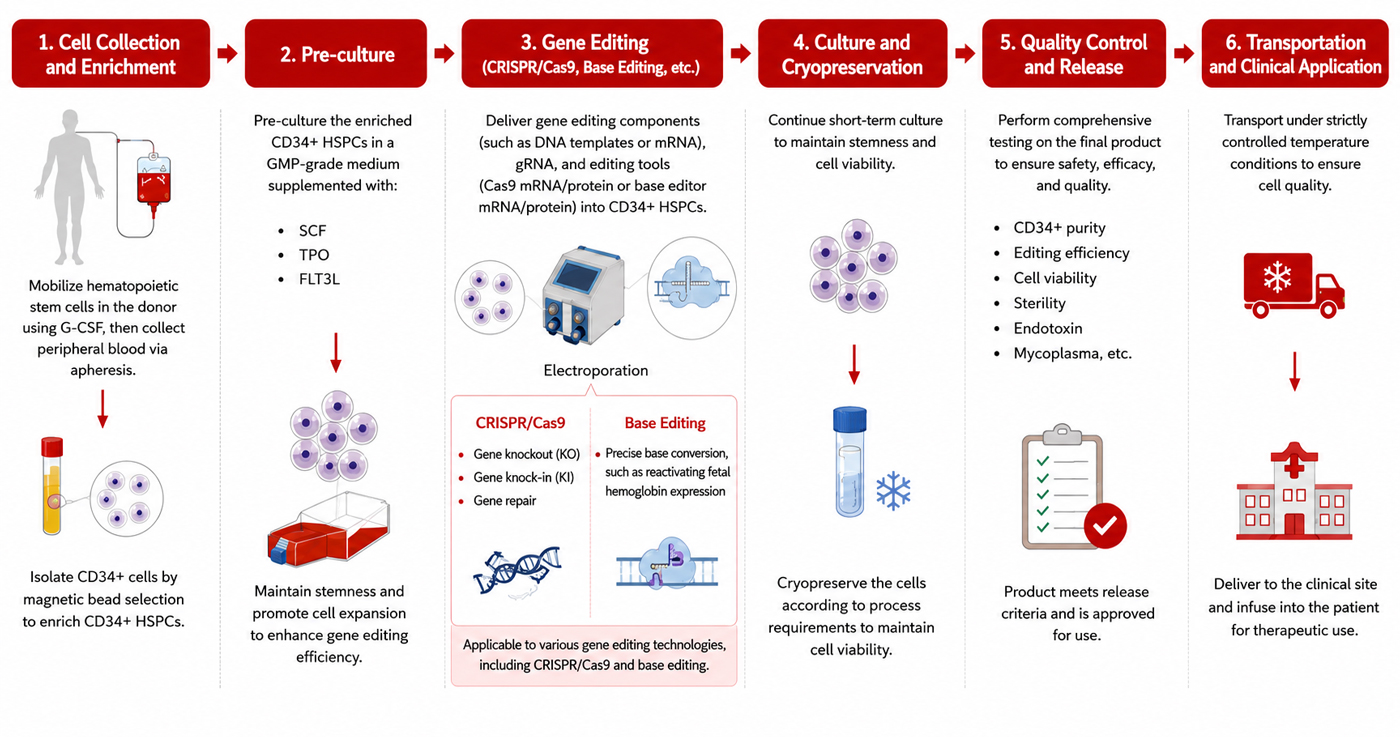
Manufacturing Process Solutions for CD34⁺ HSPC Cell Therapies
Related Products
Key Product Advantages
 Validated Performance in HSPC Culture & Expansion
Key cytokines are rigorously validated in HSPC culture models to efficiently maintain stemness, support high-fold expansion, and meet demanding downstream functional requirements.
GMP-Compliant Quality System & Biosafety Controls
Critical cytokines are manufactured under strict GMP standards. Host-cell impurities, adventitious agents, and viral risks are meticulously controlled to satisfy stringent regulatory mandates for clinical cell therapy development.
High Lot-to-Lot Consistency & Extended Shelf Life
Robust manufacturing processes and strict quality control guarantee exceptional batch-to-batch reproducibility. Multi-dimensional stability testing confirms that CD34⁺ NanoSort Microbeads maintain high performance over extended storage periods (2–5+ years).
Global Supply Assurance & Comprehensive Regulatory Support
Supported by a seamless global supply chain, we provide comprehensive regulatory documentation—including Regulatory Support Files (RSFs) and Drug Master Files (DMFs)—to accelerate CMC development and global regulatory filings (IND/CTA).
Application Data
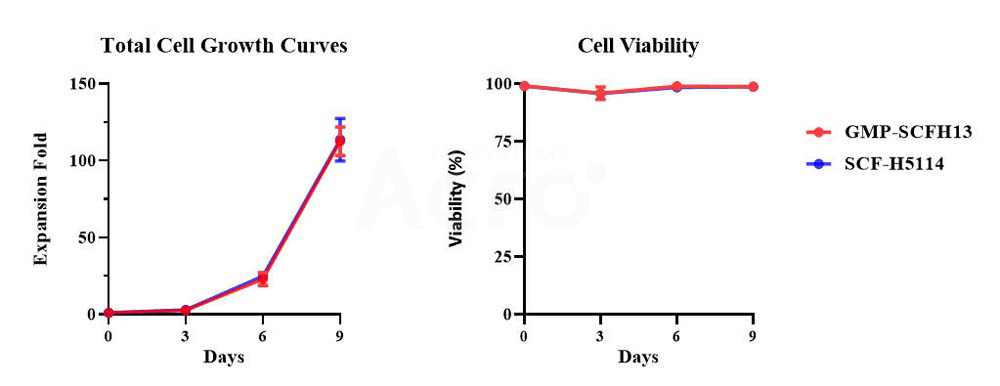
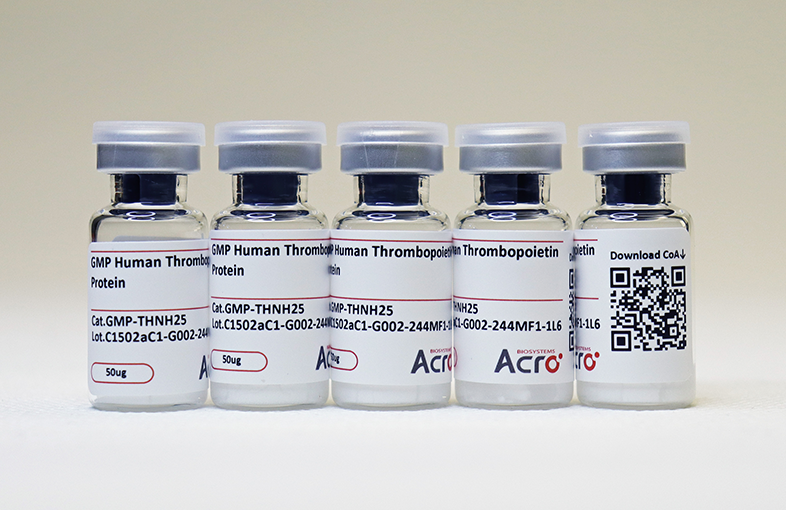
HSPCs were expanded ex vivo for 9 days using a cytokine cocktail containing GMP Human SCF Protein (E. coli) (Cat. No. GMP-SCFH13), GMP Human Flt-3 Ligand Protein (E. coli) (Cat. No. GMP-FLLH13), and GMP Human Thrombopoietin Protein (Cat. No. GMP-THNH25). The cell growth curve and cell viability are analyzed by AO/PI staining. The results demonstrate that GMP Human SCF Protein (E. coli) effectively promoted HSC expansion and maintained stemness, exhibiting performance comparable to that of Human SCF (26-189) Protein (E. coli), premium grade (Cat. No. SCF-H5114).
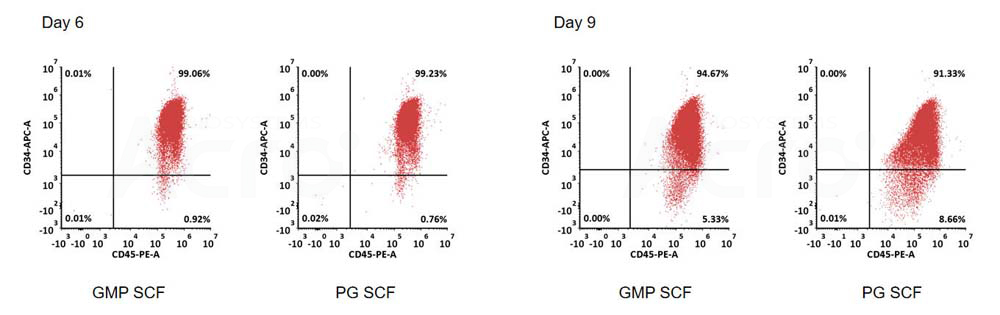
HSPCs were expanded ex vivo for 9 days using a cytokine cocktail containing GMP Human SCF Protein (E. coli) (Cat. No. GMP-SCFH13), GMP Human Flt-3 Ligand Protein (E. coli) (Cat. No. GMP-FLLH13), and GMP Human Thrombopoietin Protein (Cat. No. GMP-THNH25). The expression of HSC markers, CD34 and CD45, was subsequently analyzed by flow cytometry. The results demonstrate that GMP Human SCF Protein (E. coli) effectively promoted HSC expansion and maintained stemness, exhibiting performance comparable to that of Human SCF (26-189) Protein (E. coli), premium grade (Cat. No. SCF-H5114).
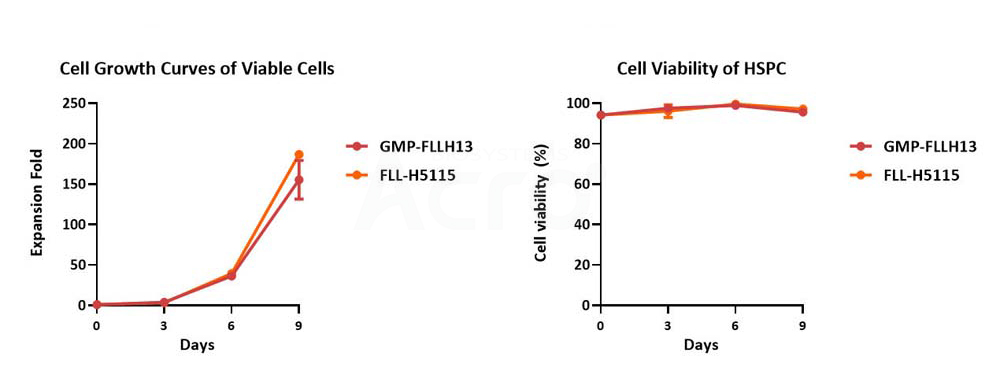
HSPCs were expanded ex vivo for 9 days using a cytokine cocktail containing GMP Human SCF Protein (Cat. No. GMP-SCFH25), GMP Human Flt-3 Ligand Protein (E. coli) (Cat. No. GMP-FLLH13), and GMP Human Thrombopoietin Protein (Cat. No. GMP-THNH25). The cell growth curve and cell viability are analyzed by AO/PI staining. The results demonstrate that GMP Human Flt-3 Ligand Protein (E. coli) could support the rapid cell expansion and good cell viability of HSPCs, exhibiting performance comparable to that of Human Flt-3 Ligand Protein (E. coli), premium grade (Cat. No. FLL-H5115).
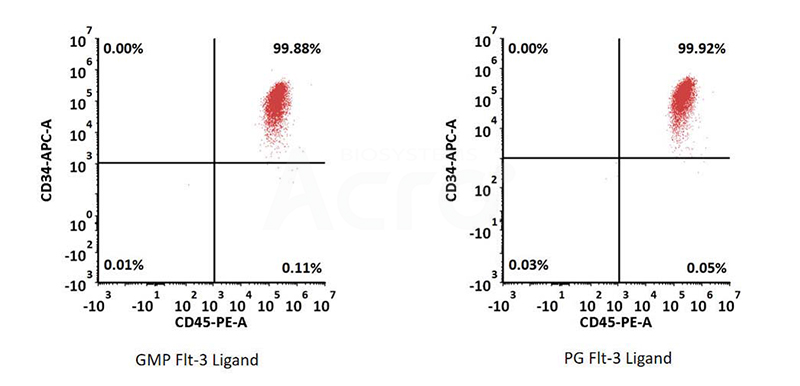
HSPCs were cultured for 3 days in medium supplemented with GMP Human SCF Protein (Cat. No. GMP-SCFH25), GMP Human Flt-3 Ligand Protein (Cat. No. GMP-FLLH13), and GMP Human Thrombopoietin (TPO) Protein (Cat. No. GMP-THNH25). Flow cytometry was used to assess the expression of surface markers CD34 and CD45. The results demonstrate that GMP Human Flt-3 Ligand Protein (Cat. No. GMP-FLLH13) promoted HSPC proliferation to a similar extent as Human Flt-3 Ligand Protein (E. coli), premium grade (Cat. No. FLL-H5115).
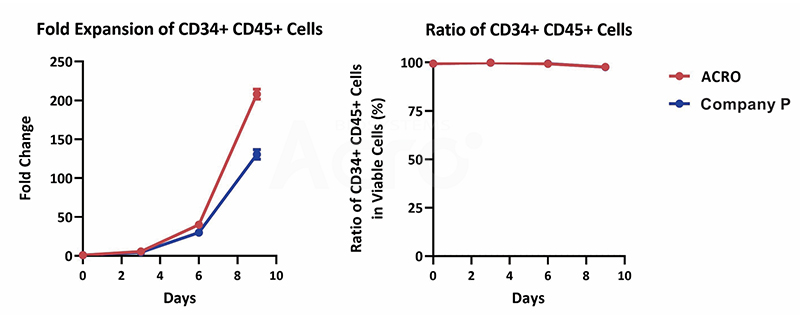
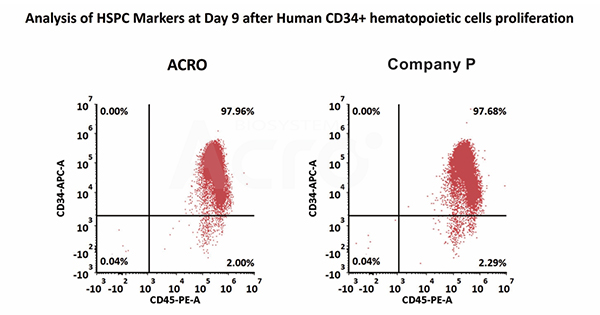
HSPCs were cultured with medium containing different factors for 9 days. The cell surface markers, CD34 and CD45, were detected with a flow cytometer. The result shows that GMP SCF (Cat. No. GMP-SCFH25), FLT3L (Cat. No. GMP-FLLH28) and TPO (Cat. No. GMP-THNH25) have the better ability to promote HSPCs proliferation of HSPCs than Company P and have similar CD34+CD45+ population compared to Company P.
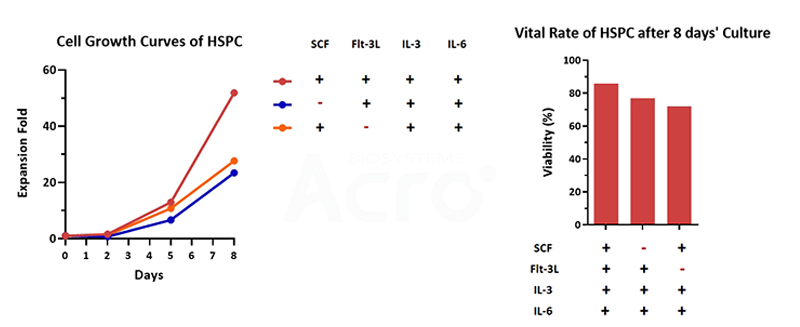
GMP Human SCF Protein (Cat. No. GMP-SCFH25), Human Flt-3 Ligand Protein (Cat. No. GMP-FLLH28), GMP Human IL-3 Protein (Cat. No. GMP-L03H18) and GMP Human IL-6 Protein (Cat. No. GMP-L06H27) could support the rapid cell expansion and good cell viability of CD34+ hematopoietic stem cells.
Differentiation Solutions for iPSC-Derived HSPCs
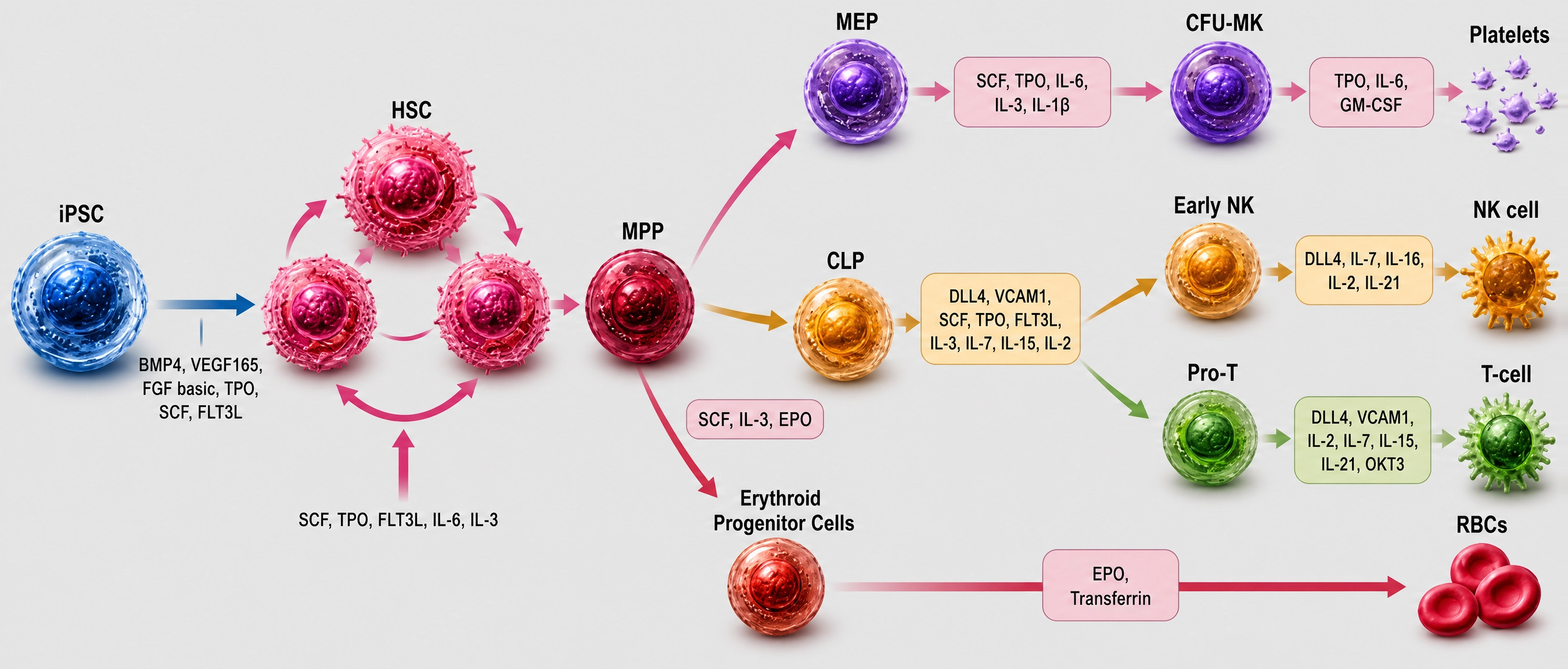
Megakaryocytic Lineage: HSCs are induced by SCF, TPO, IL-6, IL-3, and IL-1β to form megakaryocyte progenitor cells (MkPs), which mature into functional megakaryocytes (MKs) and ultimately generate platelets.
Lymphoid Lineage: HSCs transition through MPPs to form common lymphoid progenitor cells (CLPs). Regulated by factors including DLL4, VCAM1, SCF, TPO, FLT3L, IL-3, IL-7, IL-15, and IL-2, CLPs differentiate into mature lymphoid cell populations, such as NK cells and T cells.
Erythroid Lineage: HSCs are stimulated by SCF, IL-3, and EPO to form erythroid progenitor cells, which mature into functional red blood cells (RBCs) in the presence of EPO and Transferrin.
Related Products
Key Product Advantages
Driving Efficient Expansion & Multilineage Differentiation
Our optimized cytokines, media, and specialized differentiation kits support robust stemness maintenance and scalable expansion of iPSC-derived HSPCs, while enabling high-efficiency, lineage-directed differentiation into platelets, T cells, and NK cells across the full cell therapy lifecycle.
Serum-Free & Animal-Origin Free (AOF) Systems
NK and T cell expansion platforms feature serum-free, animal-origin free, and exogenous growth factor-free formulations. This minimizes system complexity, reduces adventitious virus risks, and optimizes process reproducibility.
GMP-Grade Quality Supporting Commercial-Scale Manufacturing
All products adhere strictly to GMP guidelines, delivering superior batch-to-batch consistency, secure global supply, and full Drug Master File (DMF) support to streamline CMC development and clinical translation.
Application Data
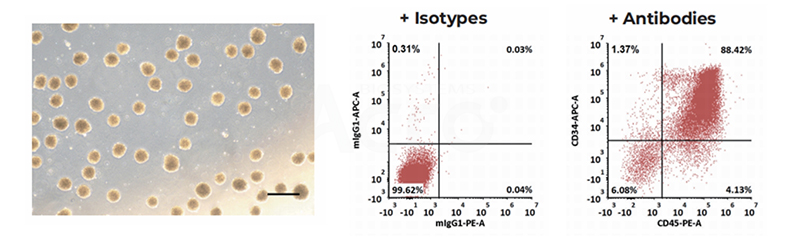
Morphological characteristics and marker expression of iPSC-derived HSPCs after 14 days of differentiation. Embryoid bodies were generated from iPSCs cultured in mTeSR™ Plus medium, followed by directed differentiation toward HSPCs in StemPro™-34 SFM Complete Medium. These medium supplemented with GMP-grade cytokines, including BMP4 (Cat. No. GMP-BM4H36), VEGF165 (Cat. No. GMP-VE5H23), SCF (Cat. No. GMP-SCFH25), TPO (Cat. No. GMP-THNH25), FLT3L (Cat. No. GMP-FLLH28), FGF basic (Cat. No. GMP-FGCH17), and VEGF165 (Cat. No. GMP-VE5H23), along with additional factors. These cytokines significantly promoted HSPCs differentiation, as evidenced by morphological characteristics and robust expression of hematopoietic stem cell markers CD34 and CD45. Scale bar, 250 μm.
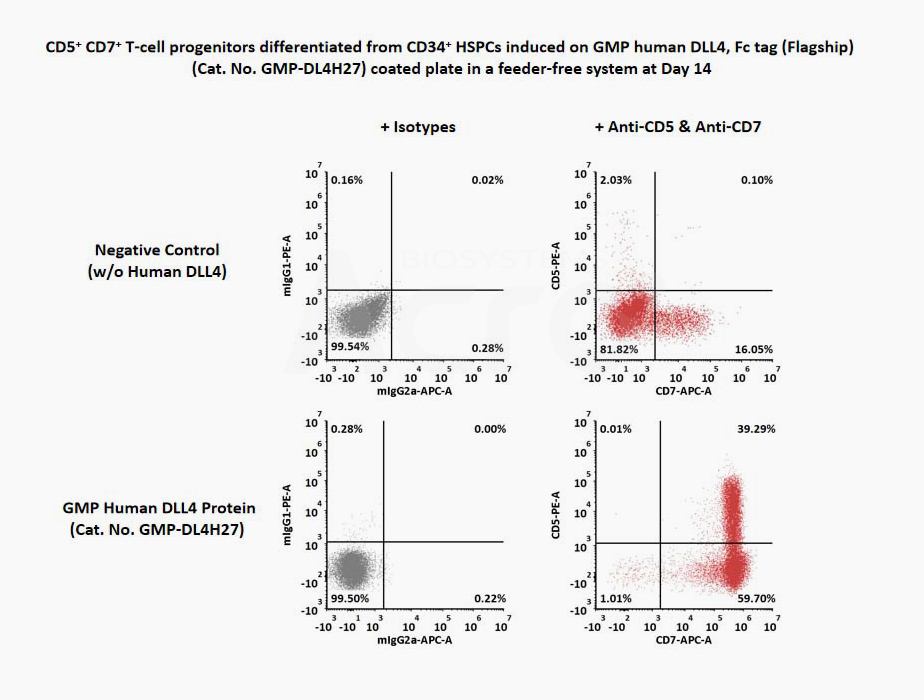
CD34+ CD45+ hematopoietic cells were seeded on GMP Human DLL4 Protein, Fc Tag (Flagship) (Cat. No. GMP-DL4H27) and GMP Human VCAM-1 Protein, Fc Tag (Cat. No. GMP-VC1H25) coated plates and differentiated for 14 days, then flow cytometry was used to detect the expression of T-cell progenitor markers, CD5 and CD7. GMP Human DLL4 Protein, Fc Tag (Flagship) (Cat. No. GMP-DL4H27) and GMP Human VCAM-1 Protein, Fc Tag (Cat. No. GMP-VC1H25) together with other growth factors could induce the high percentage of CD7+ and CD5+ CD7+ T-cell progenitors formation.
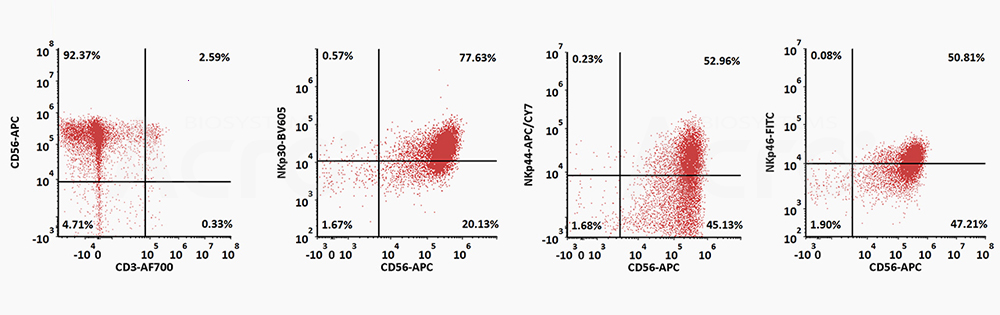
CD34+ CD45+ hematopoietic cells were seeded on GMP Human DLL4 Protein, Fc Tag (Cat. No. GMP-DL4H27) coated plates and differentiated for 14 days. Followed by 6 days of culture on non-coated plates to generate CD3-CD56+ NK Cells. Cells were harvested and analyzed for CD3, CD56, CD16, NKp30, NKp44 and NKp46 expression by flow cytometry. GMP Human DLL4 Protein, Fc Tag (Flagship) (Cat. No. GMP-DL4H27) coating on the plate could efficiently induce hematopoietic stem cells differentiation to NK cells, with high expression of CD56+ NKp30 +, NKp44 +, NKp46 + CD3- .
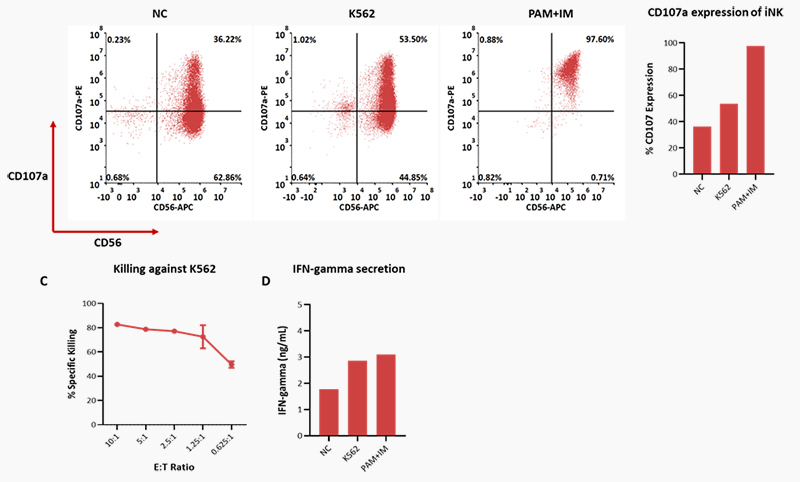
Cytotoxicity, Degranulation marker expression and cytokine production of iNK cells after exposure to K562 cells. (A, B) degranulation marker CD107a in iNK cells after coculture with K562 cells detected by flow cytometry. (C) Cytolysis of K562 cells was done with 7-AAD/CFSE staining and tested by flow cytometry. Spontaneous death of target cells has been subtracted from all plots. (D) IFN-γ secreted by iNK cells after exposure to K562 were quantified through ELISA assay.
 Order
OrderTechnical Resources
- Background & Overview
- Manufacturing Process Solutions for CD34⁺ HSPC Cell Therapies
- Differentiation Solutions for iPSC-Derived HSPCs
- Product List
- Recommended Products
- Technical Resources