


 Sep 17, 2026
 Page Views:134



INHBE/Activin E: An Emerging Target in the Next Generation of Obesity Therapeutics
As GLP-1–based therapies continue to transform obesity treatment, drug developers are increasingly looking beyond weight loss alone. Preserving lean mass, limiting weight regain after treatment discontinuation, and improving body fat distribution are emerging priorities for next-generation obesity therapies. Against this backdrop, INHBE, the gene encoding Activin E, has emerged as a promising target for obesity drug development. INHBE is predominantly expressed in the liver and encodes the βE subunit, which forms the biologically active Activin E homodimer. Once secreted into circulation, Activin E acts on ALK7 (ACVR1C) receptors on adipocytes to suppress lipolysis and promote lipid storage (figure 1). Targeting INHBE with liver-directed siRNA therapeutics may therefore reduce circulating Activin E at its source, relieve inhibition of lipolysis, and provide a potential strategy for reducing fat mass while preserving lean mass.
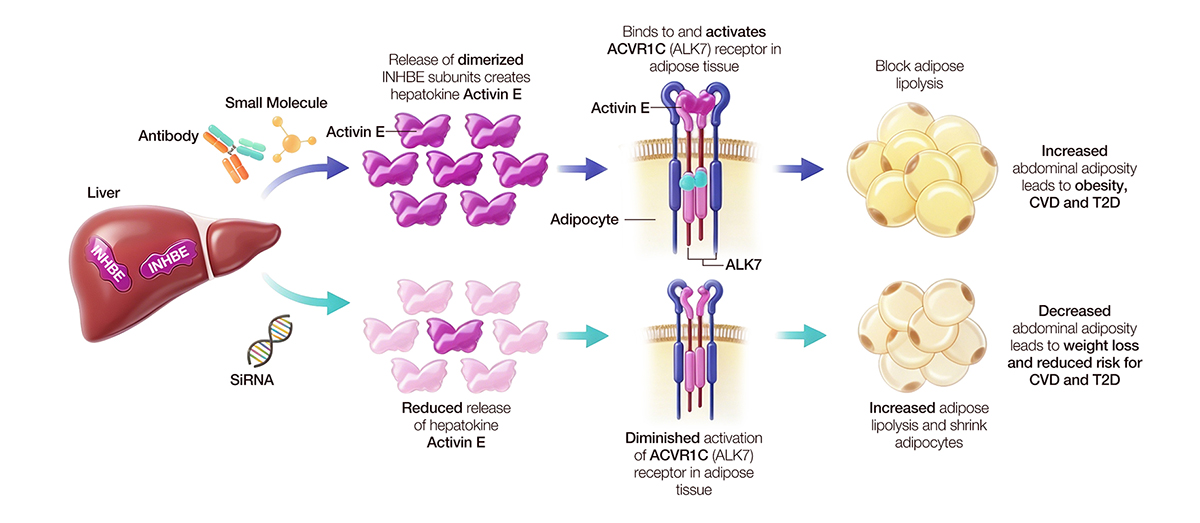
Source: publicly available information from Wave Life Sciences
Figure 1. INHBE–ALK7 signaling pathway
The INHBE therapeutic landscape is currently focused primarily on obesity and weight management, with siRNA approaches representing the majority of clinical programs (table 1). These developments highlight INHBE as an increasingly active target in the emerging field of oligonucleotide-based obesity therapeutics.
Table 1. Global INHBE (Activin E) Drug Development Landscape

Source: Pharmacodia, Data compiled on August 14, 2026.
As INHBE programs move into clinical development, the focus is expanding from simply demonstrating INHBE knockdown to determining whether target suppression translates into meaningful biological and pharmacological effects. This makes quantitative Activin E measurement increasingly relevant across the development pipeline—from candidate selection and preclinical efficacy studies to clinical pharmacodynamic (PD) monitoring and translational research. Reliable measurement of circulating Activin E can help connect target engagement, changes in protein levels, and downstream pharmacological effects, providing an important biomarker readout for INHBE-targeted therapies.
Activin E Dimer ELISA for INHBE Drug Development
To support quantitative assessment of Activin E throughout INHBE-targeted drug development, ACROBiosystems offers the Human Activin E Dimer ELISA Kit (Cat. No. CEA-B247). The assay is designed to selectively measure the biologically relevant Activin E dimer and has been evaluated for specificity and performance across human, non-human primate (NHP), and mouse samples.
Preclinical efficacy studies
Serial measurement of serum Activin E in INHBE-humanized mice and NHP models can help characterize the extent and durability of INHBE silencing, establish dose–response relationships, and evaluate pharmacodynamic effects. Activin E levels can also be assessed alongside body weight, fat mass, and other efficacy endpoints.
Clinical pharmacodynamic monitoring
In clinical development, circulating Activin E may provide a quantitative biomarker of INHBE target engagement and pharmacodynamic response. Changes in Activin E can be evaluated in relation to dose, treatment duration, and changes in body composition to help characterize the biological response to therapy.
Translational research
Comparing baseline and post-treatment Activin E levels may help characterize target biology and inter-individual differences in response, while providing additional data for patient stratification and clinical study design.
Working on INHBE/Activin E Research? Request the Activin E Assay Method Validation Data Package
Designed for the Analytical Challenges of Activin E Measurement
01 | Selective Detection of the Activin E Dimer
The βE subunit encoded by INHBE does not have the same biological activity as the dimeric form. Activin E exerts its biological function primarily as a homodimer. An assay that does not distinguish between monomeric and dimeric forms may detect both species, potentially overestimating the concentration of biologically active Activin E and complicating pharmacodynamic interpretation. The capture and detection antibodies used in the Activin E Dimer ELISA Kit were selected for their preferential recognition of the dimeric form and low binding to the monomer (table 2). This enables more specific measurement of the biologically relevant Activin E dimer.
Table 2. Cross-reactivity of Activin E oligomeric/non-dimeric forms

02 | High Specificity Across the Activin Family
The Activin family comprises closely related proteins with substantial sequence homology. Activin C, in particular, shares significant sequence similarity with Activin E and may present a potential source of cross-reactivity in immunoassays. The Activin E Dimer ELISA Kit was extensively evaluated for cross-reactivity and showed no significant cross-reactivity with Activin C, supporting specific Activin E measurement in complex biological samples (table 3).
Table 3. Cross-reactivity with Activin C

03 | Sensitive Detection in Complex Serum Matrices
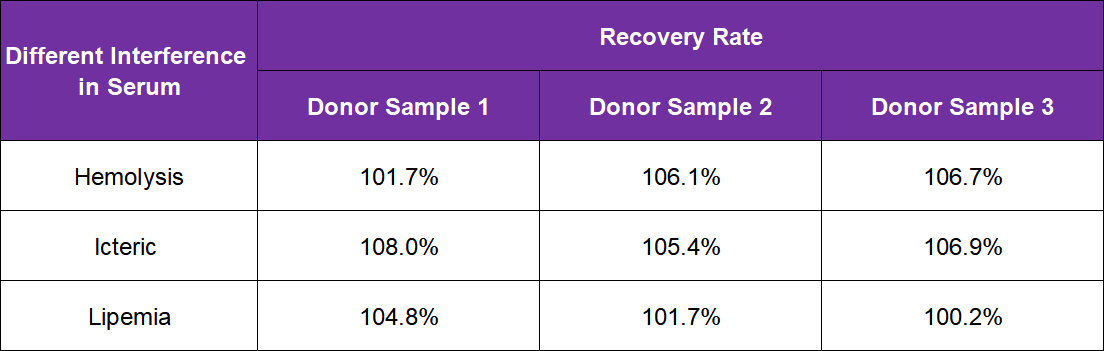
For INHBE-targeted siRNA programs, monitoring circulating Activin E following treatment can provide a quantitative readout of target suppression and pharmacodynamic response. The assay offers an LOD of 60 pg/mL, enabling sensitive detection of treatment-related changes in Activin E levels. During assay development, matrix effects were systematically evaluated, and an optimized sample dilution strategy was established to minimize interference from endogenous matrix components, including lipids and binding proteins (table 4). These features support accurate and reproducible Activin E measurements in complex serum samples and longitudinal studies.
Table 4. Interference recovery in human serum
Validated Across Mouse, NHP, and Human Samples
01 | Humanized Mouse Model
To evaluate assay performance in humanized mouse models, ACROBiosystems collaborated with Cyagen to analyze serum samples from Cyagen's proprietary huINHBC/huINHBE humanized mice (Cat. No. C001931) and huINHBE humanized mice (Cat. No. C001533). Human INHBE was readily detected in serum from both homozygous huINHBC/huINHBE and huINHBE mice. Serum INHBE levels were higher in huINHBC/huINHBE mice than in huINHBE mice, potentially reflecting differences in promoter configuration between the two models (figure 2). These results demonstrate the utility of the Activin E Dimer ELISA Kit for measuring human INHBE/Activin E in humanized mouse models.

Figure 2. Serum human INHBE levels in humanized mouse models
Serum human INHBE levels in huINHBC/huINHBE and huINHBE mice were quantified by ELISA. Animals were 8–9 weeks old homozygous males (n=5 per group). Data are presented as mean ± SD. Statistical significance was assessed using a t-test, with P<0.05, P<0.01, and P<0.001 considered statistically significant. Human INHBE was quantified using the Human Activin E Dimer ELISA Kit (Cat. No. CEA-B247). The assay demonstrated no cross-reactivity with human INHBC.
02 | Human Serum Samples
To assess assay performance in human samples, serum Activin E levels were measured in healthy donors and donors with high BMI. Activin E was detected in 100% of samples. Mean concentrations were 12.78 ng/mL in healthy donors and 28.13 ng/mL in donors with high BMI, with significantly higher Activin E levels observed in the high-BMI group (figure 3). The observed difference is consistent with the proposed role of Activin E in regulating adipocyte lipolysis and lipid storage, supporting the biological relevance of Activin E measurement in human samples.
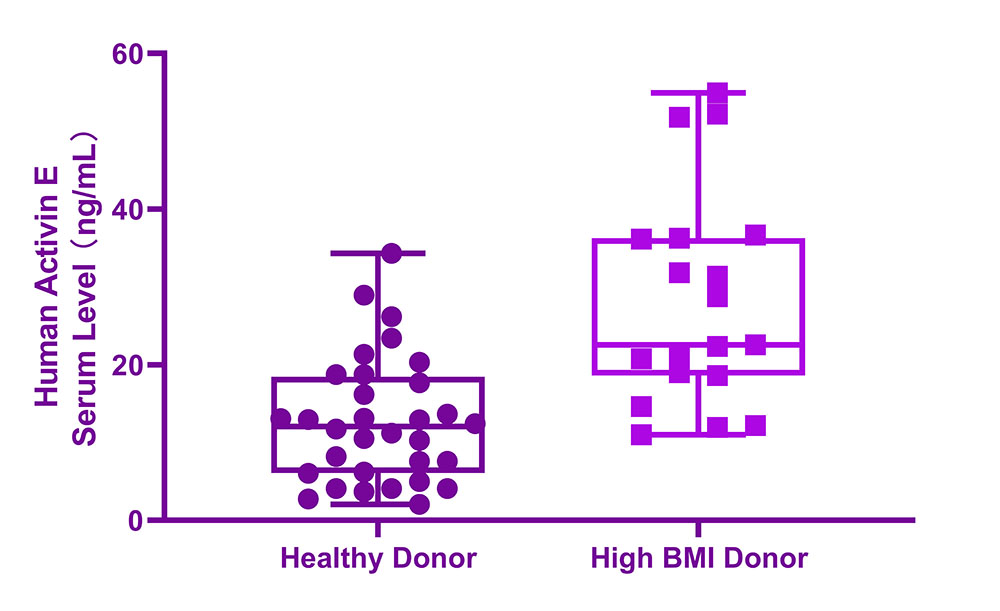
Figure 3. Serum Activin E levels in healthy and high-BMI donors
03 | NHP Study
The Human Activin E Dimer ELISA Kit (Cat. No. CEA-B247) was used to measure serum Activin E dimer levels in NHPs following treatment with an INHBE-targeted siRNA. Serum Activin E levels decreased rapidly following treatment and remained suppressed throughout the 56-day observation period, while levels remained stable in the control group (figure 4). These data demonstrate the potential utility of Activin E dimer as a pharmacodynamic biomarker for INHBE-targeted siRNA therapies, supporting assessment of target knockdown and treatment response.
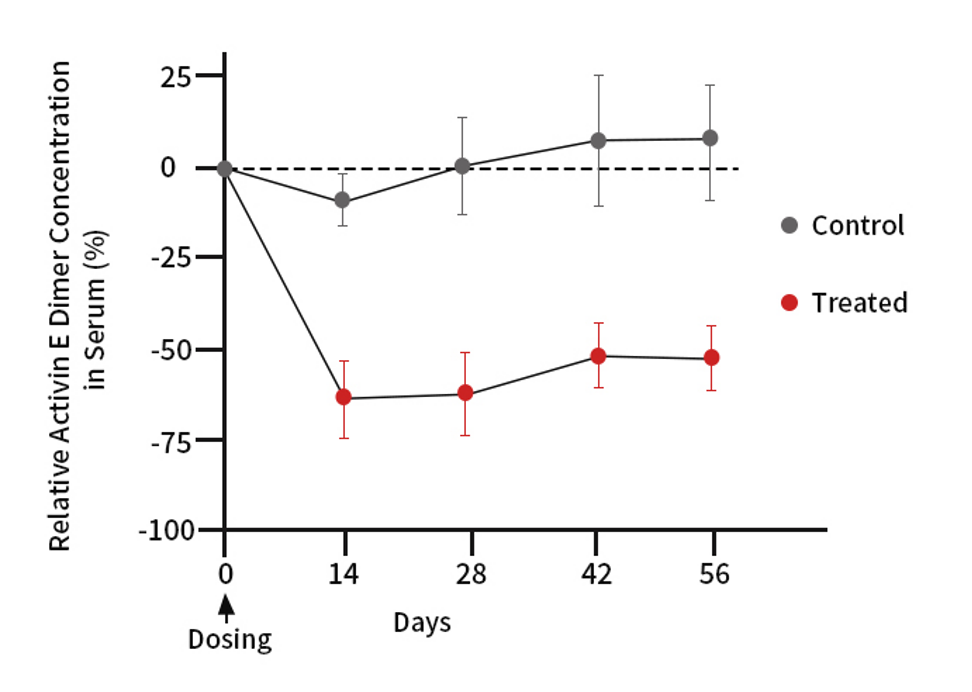
Figure 4. Serum Activin E suppression following INHBE siRNA treatment in NHP
Note: Data were provided by a third-party CRO and are for research reference only. Study design and analytical method validation should be independently established based on specific research requirements.
A Broader Biomarker Portfolio for Metabolic Drug Development
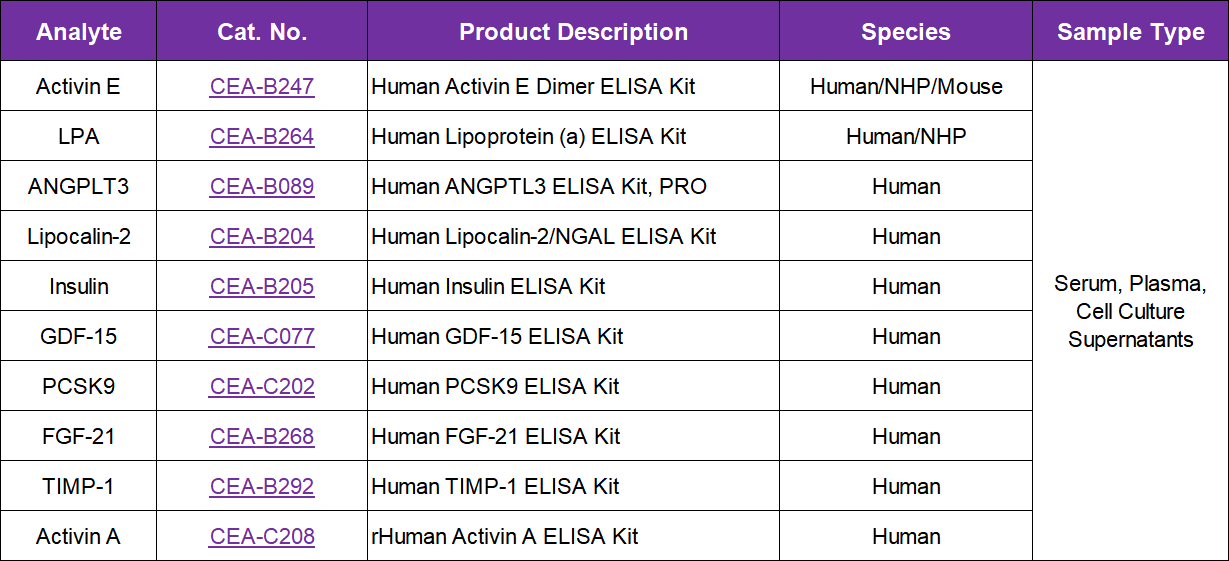
ACROBiosystems offers a broad portfolio of ELISA kits covering key biomarkers involved in lipid metabolism, glucose metabolism, and cardiovascular risk, including Lipoprotein (a), FGF-21, GDF-15, Insulin, PCSK9, and ANGPTL3. The portfolio supports multiple sample types, including serum, plasma, and cell culture supernatants, enabling biomarker analysis across mechanistic studies, preclinical efficacy evaluation, and clinical development (table 5).
Table 5. Metabolic biomarker ELISA kit portfolio
Beyond off-the-shelf assays, ACROBiosystems also provides custom biomarker assay development and validation services tailored to specific drug development programs. Assay development can be customized based on the target analyte, sample matrix, development stage, and study objectives. Interested in developing an Activin E or other biomarker assay for your program? Contact us to discuss your requirements.