



 Nov 12, 2026
 Page Views:53



Transmembrane Protein Preparation Technologies and Product Formats
Transmembrane proteins are embedded in the lipid bilayer and participate in physiological processes such as substance transport and signal transduction. Their dysfunction is associated with a wide range of diseases, making them important targets for drug development [1, 13]. When such targets are used for in vitro studies, it is particularly important to preserve their conformation and activity during preparation. A sound preparation strategy should not only achieve solubilization of the transmembrane protein but also account for the influence of the surrounding lipid environment on conformation and activity, balancing protein stability with functional retention [1].
Some multi-pass transmembrane proteins exhibit low expression levels, and their hydrophobic transmembrane regions further increase the difficulty of solubilization and purification. Technical routes such as detergent solubilization, transmembrane display on VLPs, nanodisc reconstitution, and native membrane extraction offer a variety of product formats for different experimental needs [1, 13].
Detergent micelles achieve solubilization by enveloping the hydrophobic regions of the protein, maintaining it in a soluble state that facilitates subsequent purification and supports quantitation and binding analysis of the purified transmembrane protein [1]. Optimizing the type and concentration of detergent for the target protein helps minimize the loss of essential lipids and maintain protein stability [1].
Virus-like particles (VLPs) are produced by co-expressing the membrane protein with viral structural proteins, so that the target protein is embedded in the lipid bilayer during particle budding, enabling multivalent display [4]. In practical applications, including a blank particle control helps identify carrier-related background.
Membrane scaffold protein (MSP) Nanodiscs are co-assembled from purified protein, phospholipids, and membrane scaffold protein (MSP) during detergent removal, forming water-soluble nanodiscs that contain a lipid bilayer [1]. This technology allows the lipid composition to be adjusted according to research needs, and the loading and stabilization conditions can be optimized for the target protein to build a tailored lipid bilayer environment [10].
Native membrane extraction nanodiscs are formed by extracting the transmembrane protein together with its surrounding lipids from the membrane, yielding nanodiscs that retain the native lipid environment while reducing reliance on detergent solubilization [8]. With this technology, suitable extraction materials can be selected according to the membrane composition and the extraction conditions optimized for the target, helping to balance extraction efficiency with system compatibility and adapt to the preparation requirements of different targets [1, 8].
Other formats include proteoliposomes, which provide an enclosed membrane space, as well as saposin-lipoprotein nanoparticles [3] and the Peptidisc peptide-based encapsulation system [2]. The suitability of each preparation route for a given application can be assessed through activity validation of the target protein [1].
To address the diverse application needs of transmembrane proteins in drug screening, antibody development, and functional research, ACROBiosystems has developed the specialized Full-Length Active Gallery solution, encompassing four major technology platforms—VLP, Detergent, Nanodisc, and Nanodisc-Pro (native membrane extraction nanodiscs)—that provide corresponding product formats for downstream applications of multi-pass transmembrane proteins.
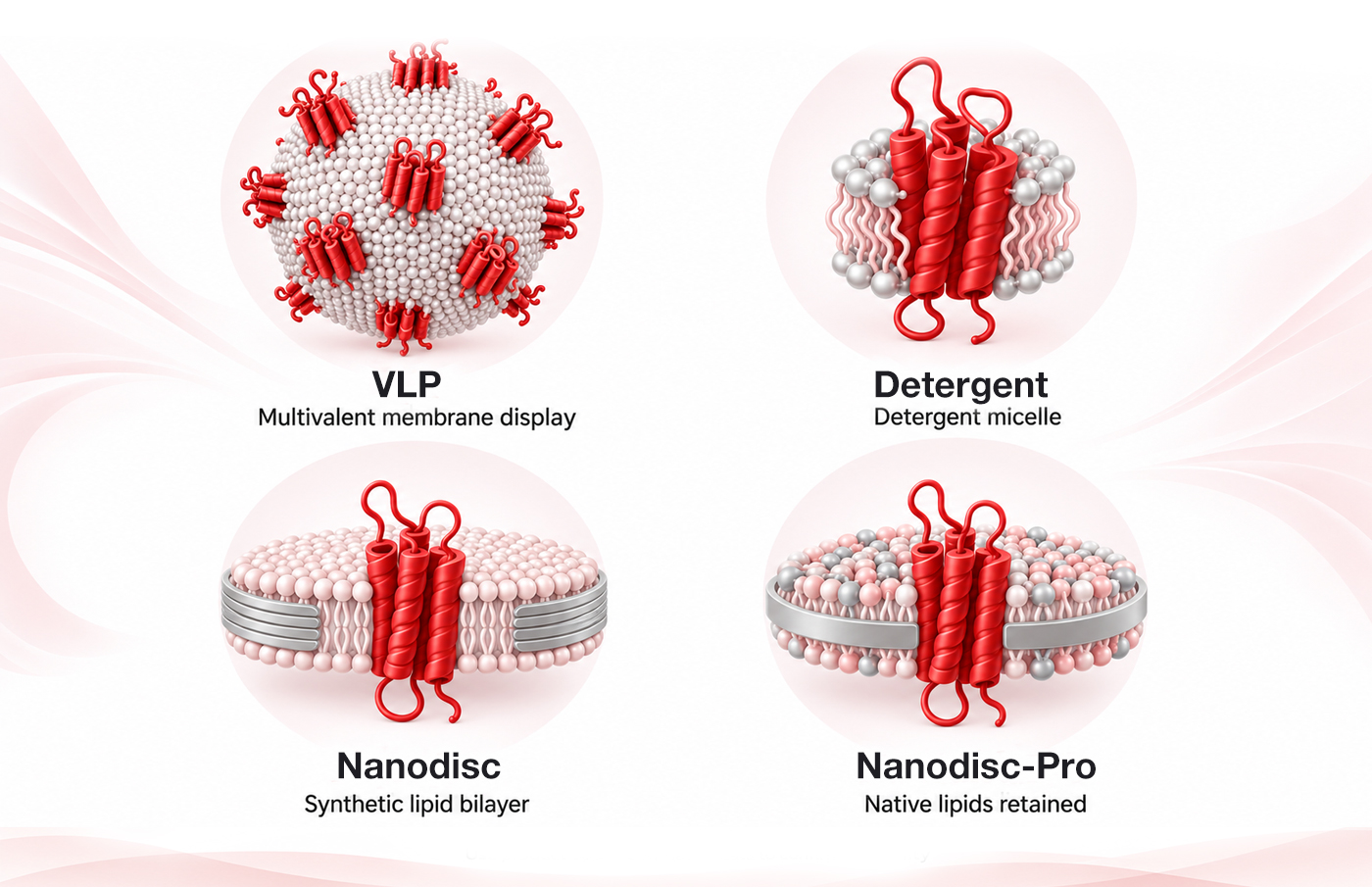
Figure 1: Four common formats of transmembrane proteins.
Table 1. Four Product Formats and Key Features of the Full-Length Active Gallery
| Technology Platform | Core Principle | Product Features | Key Evaluation Dimensions | ||||
|---|---|---|---|---|---|---|---|
| Transmembrane Protein Abundance | Immunogenicity | Precisely Quantifiable | Native Conformation | Cell-Friendly | |||
| VLP | Embedded in the lipid bilayer during budding | Multivalent display, blank particle control required | + | ++++ | + | ++++ | +++ |
| Detergent | Detergent solubilization and purification | Easy to quantitate, buffer matching required | ++++ | ++++ | ++++ | +++ | - |
| Nanodisc | Reconstitution with MSP and synthetic lipids | Water-soluble lipid bilayer, detergent-free final product | ++ | +++ | +++ | +++ | +++ |
| Nanodisc-pro | Extraction of the protein with surrounding native lipids | Native lipids retained, no detergent used in extraction | ++ | +++ | ++ | ++++ | +++ |
Note: The “+” ratings are qualitative assessments from ACRO’s platform comparison materials, not quantitative comparisons conducted under standardized conditions. The ratings and the features of each format do not constitute a universal ranking of superiority or inferiority, nor can they replace the application validation of specific products. Format suitability should be judged against the requirements of downstream experiments for conformational preservation, quantitation, and system compatibility. Rating source: ACRO’s Full-Length Active Gallery platform.
Requirements for Transmembrane Protein Products in Different Application Scenarios
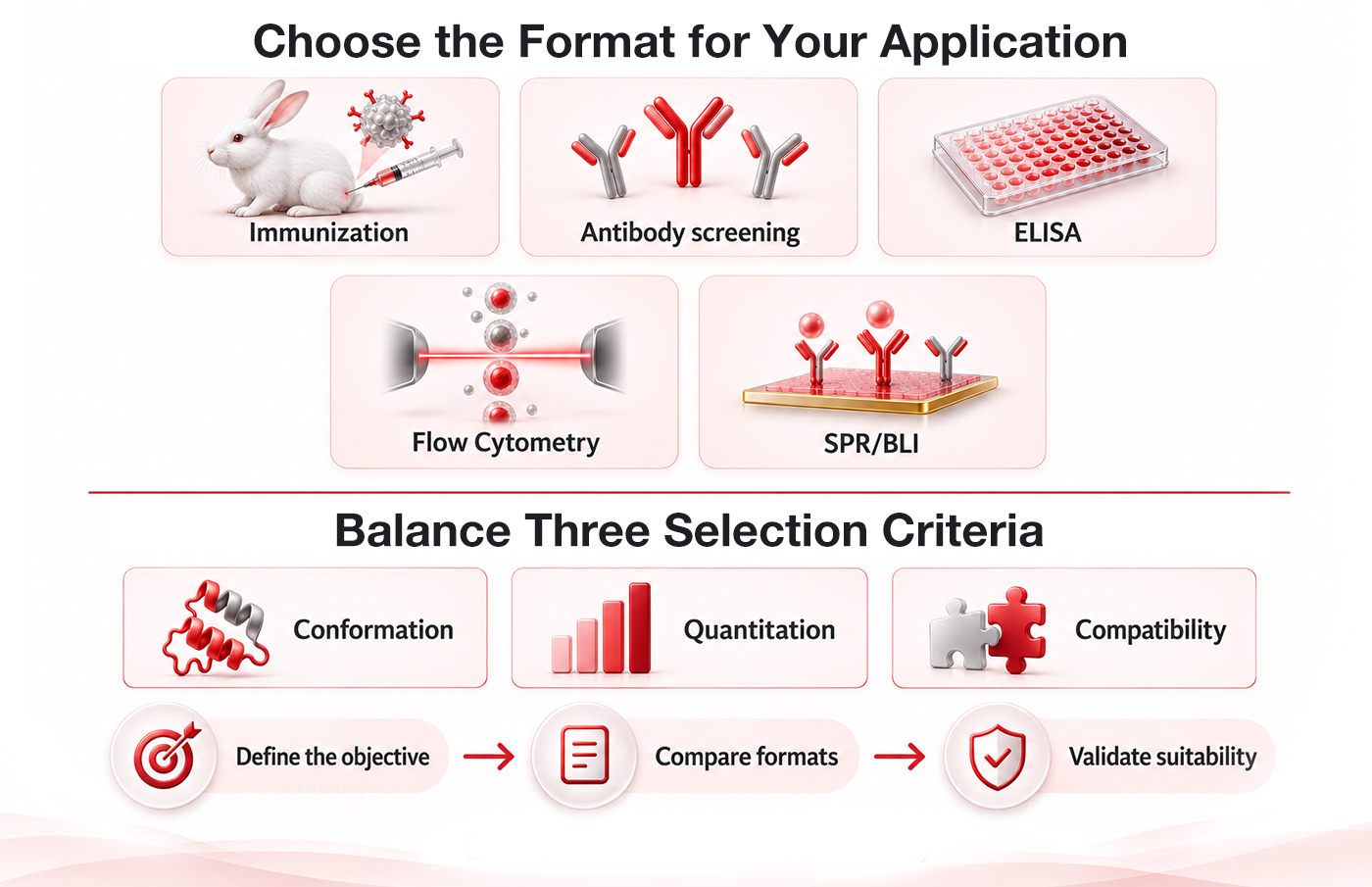
Figure 2: Choosing the right protein format for your application by balancing conformation, quantitation, and compatibility.
1. Immunization
Immunization aims to induce target-specific antibodies. Transmembrane protein antigens used for immunization must retain the target conformational epitope, be capable of inducing an immune response, and be administered at an effective dose [4]. At the same time, interference from non-target components and carrier-related responses should be controlled to avoid misinterpreting off-target responses as target-specific immunization effects.
To meet the antigen presentation and dose management requirements of immunization, ACRO’s Full-Length Active Gallery recommends VLP or Detergent as the preferred choice: VLPs provide multivalent display [4], while the Detergent format facilitates dose control. Nanodisc and Nanodisc-Pro serve as alternative options.
2. Antibody Screening
Antibody screening aims to obtain target-specific candidate antibodies. Transmembrane protein antigens used in this scenario must retain the target conformational epitope [5] and be amenable to quantitation, labeling, or capture to support library screening and affinity maturation. Meanwhile, non-target components and carrier-related binding should be controlled to reduce non-specific interference and improve the reliability of screening target-specific candidates [5].
Balancing antigen quantitation operations with the target’s lipid environment, ACRO’s Full-Length Active Gallery recommends Detergent or Nanodisc-Pro as the preferred choice: the Detergent format facilitates quantitation and handling of the target protein, making it easy to manage antigen usage during screening, while Nanodisc-Pro retains the native lipid environment and supports screening against lipid-dependent targets. As alternatives, Nanodisc provides a lipid bilayer environment [5] and VLP provides multivalent display.
3. ELISA
ELISA is used for binding detection and quantitative analysis [6]. Transmembrane protein antigens used in this scenario require a defined concentration, be amenable to coating or capture, and keep the target epitope recognizable by the corresponding antibody after coating or capture [6]. Meanwhile, batch-to-batch consistency should be ensured and non-target components and carrier-related binding controlled to reduce background interference and improve assay specificity and reproducibility [12].
ELISA selection focuses on antigen quantitation, coating or capture, and target epitope recognition. ACRO’s Full-Length Active Gallery recommends Detergent as the preferred choice, as it facilitates quantitation of the target protein and coating or capture operations, supporting binding detection and quantitative analysis [1, 6]. Alternative formats each have their strengths: the lipid bilayer environment of Nanodisc and the native lipid environment of Nanodisc-Pro support conformation-dependent binding detection, while VLP enhances detection signals through multivalent display.
4. Flow Cytometry
Flow cytometry can be used for cell-level binding validation: a labeled transmembrane protein antigen probe is incubated with live cells expressing the corresponding binding partner, and probe binding to the cells is detected at the single-cell level [7]. Transmembrane protein antigen probes used in this scenario must retain the target conformational epitope, contain sufficient effective target protein, and be amenable to quantitation and labeling. Meanwhile, a negative control protein should be included, non-target components and carrier-related binding controlled, and compatibility with live-cell detection conditions maintained, to reduce background interference and improve the specificity and reproducibility of detection.
For this type of cell-level binding validation, ACRO’s Full-Length Active Gallery recommends Nanodisc as the preferred choice: its water-soluble lipid bilayer environment and detergent-free final product are the main reasons for this recommendation. Nanodisc-Pro and VLP serve as alternatives, providing a native lipid environment and multivalent membrane display, respectively.
5. SPR/BLI
SPR/BLI is used to measure binding affinity and binding kinetics. Transmembrane protein antigens must maintain stable binding activity, contain a defined and accurately quantifiable amount of effective target protein, and be amenable to oriented capture [9, 11]. Experiments should also control non-target components and carrier background and manage the avidity effects arising from multivalent binding. Avidity refers to the overall enhancement of binding produced by the joint action of multiple binding sites, which can affect the measured apparent affinity and kinetic parameters; controlling its influence helps improve the accuracy and reproducibility of the analysis [9, 14].
For affinity and binding kinetics measurements, ACRO’s Full-Length Active Gallery recommends Detergent as the preferred choice, leveraging its advantages for target protein quantitation and binding analysis [1]. Alternative formats each have their strengths: Nanodisc provides a synthetic lipid bilayer environment, Nanodisc-Pro retains the native lipid environment and supports binding characterization of lipid-dependent targets, and VLP provides multivalent membrane display.
Table 2 summarizes the recommendations of ACRO’s Full-Length Active Gallery; the final choice should still be made considering the target, epitope, and experimental conditions.
Table 2. Recommended Full-Length Active Gallery Product Formats for Different Application Scenarios
| Scenario | Core Requirements for Transmembrane Protein Antigens | Preferred | Alternative |
|---|---|---|---|
| Immunization | High immunization titer, native conformation, low impurity interference | VLP, Detergent | Nanodisc-Pro, Nanodisc |
| Antibody Screening | Low non-specific background, native conformation | Detergent, Nanodisc-Pro | Nanodisc, VLP |
| ELISA | Efficient direct coating, high batch consistency, Low non-specific background | Detergent | Nanodisc, Nanodisc-Pro, VLP |
| Flow Cytometry | High membrane protein abundance, high batch consistency, Low non-specific background | Nanodisc | Nanodisc-Pro, VLP |
| SPR/BLI | Precisely quantifiable, high membrane protein abundance, no multivalent avidity artifact | Detergent | Nanodisc, Nanodisc-Pro, VLP |
Note: Preferred and alternative options reflect the product format recommendations of ACRO’s Full-Length Active Gallery for different application scenarios. The “core requirements” distill the selection focus of each scenario: immunization focuses on target-specific antibody titers; antibody screening on the specificity of candidate antibodies; ELISA on coating or capture efficiency, batch consistency, and detection specificity; Flow Cytometry on effective target protein content, ease of fluorescent labeling, and compatibility with live-cell detection; and SPR/BLI on precise quantitation and management of multivalent avidity effects.
The requirements of the five application scenarios help clarify the focus of transmembrane protein selection. Selection can proceed in the sequence of “define the experimental objective—compare product formats—validate application suitability”: first determine the target epitope and detection method, then compare conformational preservation, reliable quantitation, and system compatibility, and finally verify application suitability through the activity and experimental performance of specific products.
Select product formats according to the experimental objective: VLP or Detergent is preferred for immunization; Detergent or Nanodisc-Pro for antibody screening; Detergent for ELISA and SPR/BLI; and Nanodisc for Flow Cytometry (the full recommendation matrix is shown in Table 2).
ACRO’s Full-Length Active Gallery offers multiple product formats and application validation data. Evaluating product suitability by combining the platform introduction, product information for full-length CD20 / CLDN18.2 / STEAPs / GPRC5D / Claudin 6 / CCR8 protein products information, and the specific experimental conditions helps reduce trial and error in format selection.