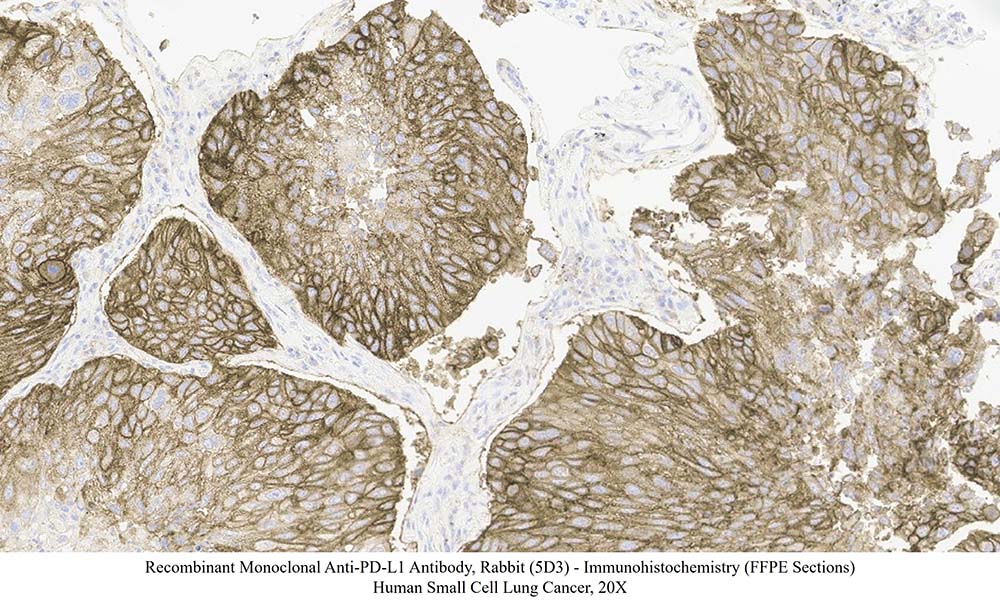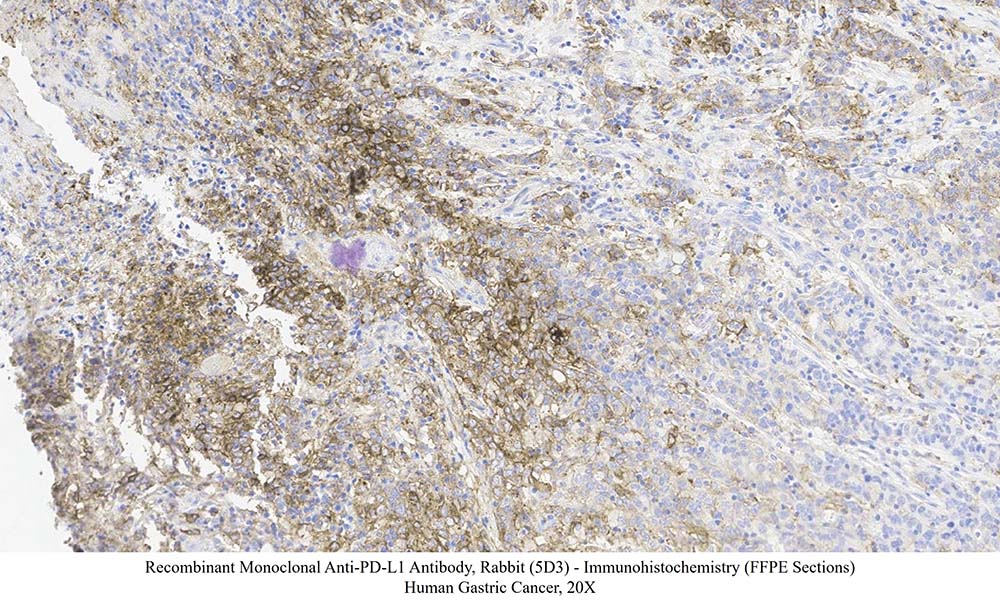

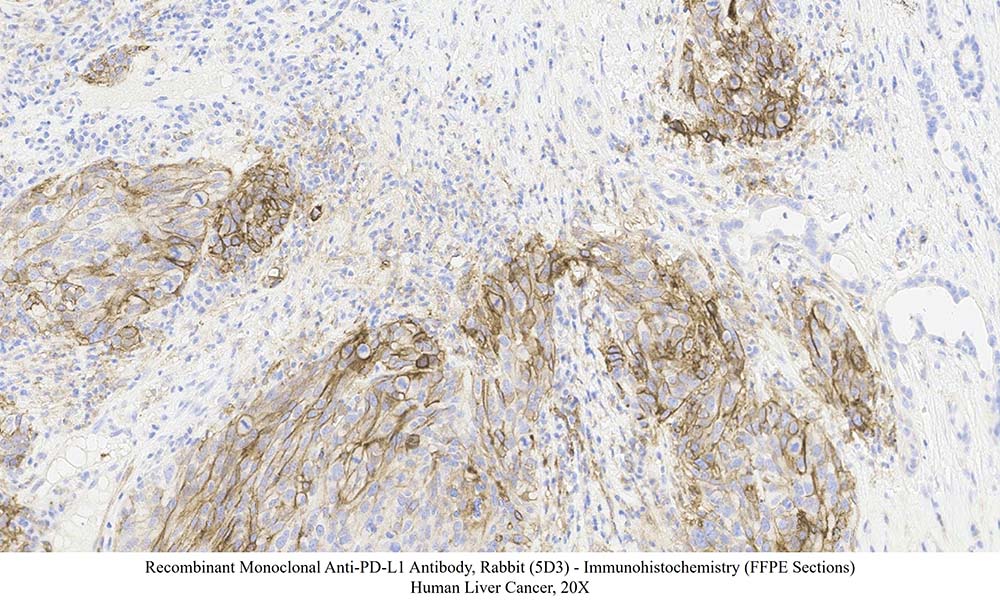
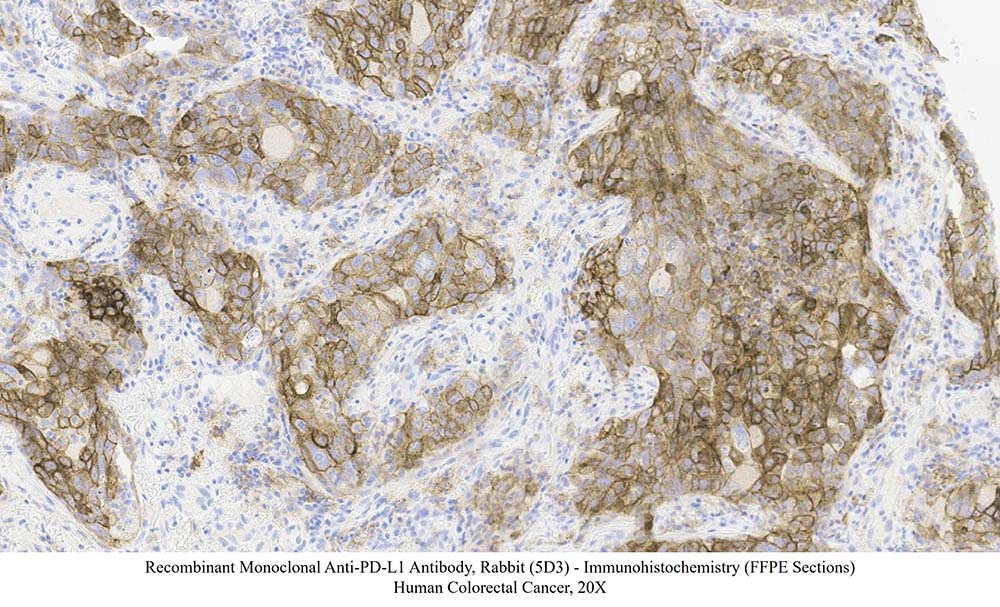

Recombinant Monoclonal Anti-PD-L1 Antibody, Rabbit (5D3)

1/5
+2 View all
Cat. No. / Size
Price
Availability
Qty
HCS-S240-20ul
$150.00
In Stock - Delivery in 2-3 weeks
HCS-S240-100ul
$495.00
In Stock - Delivery in 1-2 business days
HCS-S240
Sub-Total :
$ 0
0
Add to Cart
Customize Product Request Quote
Contact Us
Contact Us
Sub-Total:
$ 0
0
Add to Cart
  • Product Details
  • Performance Data
  • Reviews & Citations
  • Important Statement
  • Resources
Source

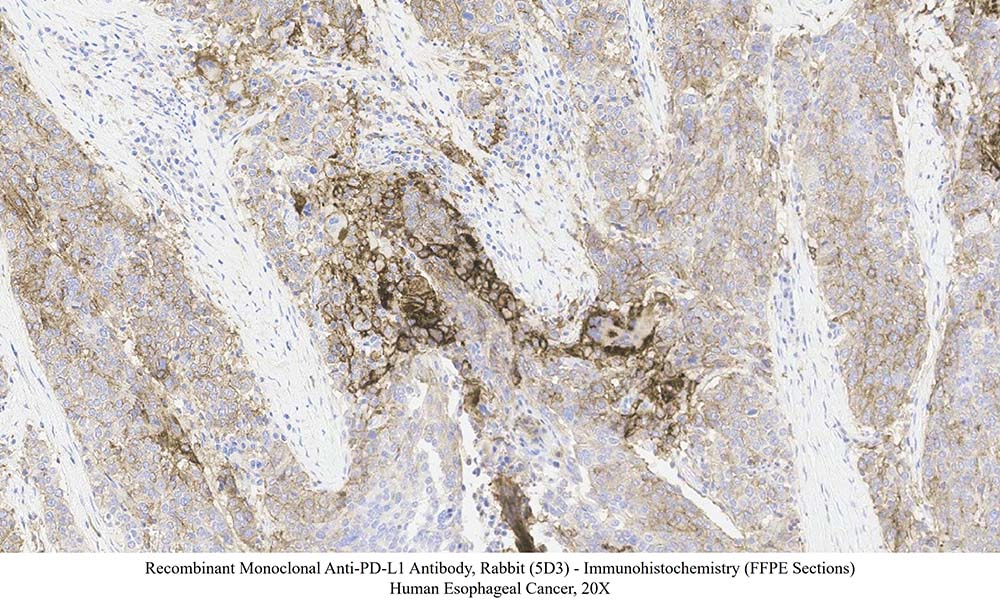
Recombinant Monoclonal Anti-PD-L1 Antibody, Rabbit (5D3) is a PD-L1 primary antibody for IHC application.

Antibody Type

Recombinant Monoclonal

Clone

5D3

Isotype

Rabbit IgG, Rabbit Kappa

Host Species

Rabbit

Reactivity

Human

Specificity

React with PD-L1 protein on the membrane of target cell/tissue.

Application
Application
Recommended Use
IHC-P
1: 500 - 1: 2000

* Recommended dilutions are for reference only. Optimal working concentrations may vary depending on your consumables, reagents, and assay conditions. We recommend optimizing for your specific system. No warranty is made regarding performance at any specific dilution.

Purification

Protein A purified.

Concentration

0.9~1.1 mg/ml

Form

Liquid

Formulation

Supplied a 0.22 μm-filtered solution in Tris buffer containing 1% BSA.

Please contact us for customized product forms or formulations.

Shipping

Liquid product is shipped at blue ice.

Storage

Please avoid repeated freeze-thaw cycles.

This product is stable after storage at:
  • 2°C to 8°C for 14 days;
  • -20°C to -70°C for 12 months.
Notices

Product Specific Notices: For research use only.
Background

PD-L1, is a ligand that binds with the receptor PD1, commonly found on T-cells, and acts to block T-cell activation. PD1 expression has been observed in a variety of cancers including melanoma and non-small cell lung cancer. The interaction of PD1/PDL1 is hypothesized to be a possible mechanism for the tumor to escape immune response. A number of checkpoint blockade inhibitors including pembrolizumab and nivolumab have been developed that target the PD1/PDL1 interaction in order to allow T-cells to recognize tumor cells without being deactivated by the tumor.