

Human GIPR Protein, Fc Tag (SPR verified)

Customer Reviews
Cat. No. / Size
Price
Availability
Qty
GIR-H5253-100ug
$500.00
In Stock - Delivery in 2-3 business days
GIR-H5253-1mg (500ug X 2)
$3640.00
In Stock - Delivery in 2 weeks

Product Details

  • Synonyms

    PGQTL2

  • Source

    Human GIPR Protein, Fc Tag (GIR-H5253) is expressed from human 293 cells (HEK293). It contains AA Gly 26 - Gln 138 (Accession # P48546-1).

    Predicted N-terminus: Gly 26

    Request for sequence
  • Molecular Characterization

    GIPR Structure

    Other Tags and Version Biotin & Other Labeled Version

    This protein carries a human IgG1 Fc tag at the C-terminus.

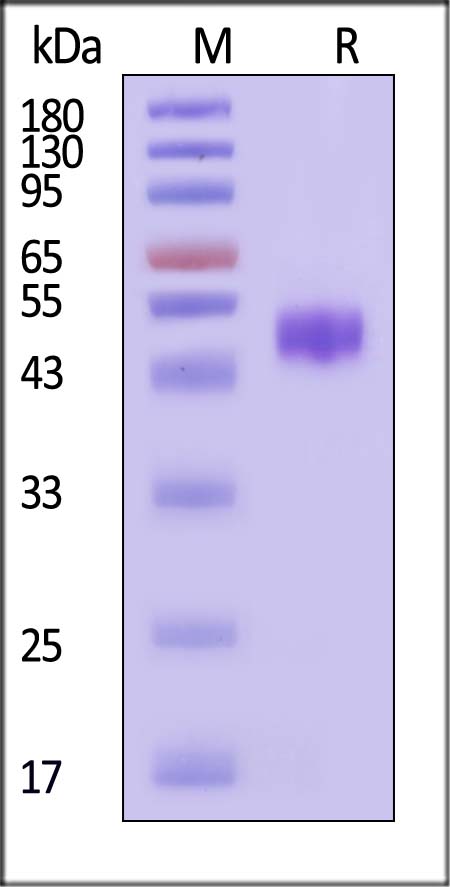
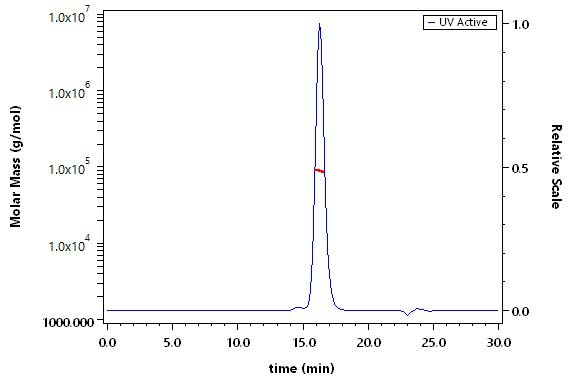
    The protein has a calculated MW of 39.4 kDa. The protein migrates as 45-55 kDa when calibrated against Star Ribbon Pre-stained Protein Marker under reducing (R) condition (SDS-PAGE) due to glycosylation.

  • Endotoxin

    Less than 1.0 EU per μg by the LAL method / rFC method.

  • Purity

    >95% as determined by SDS-PAGE.

  • Formulation

    Lyophilized from 0.22 μm filtered solution in PBS, pH7.4 with trehalose as protectant.

    Contact us for customized product form or formulation.

  • Reconstitution

    Please see Certificate of Analysis for specific instructions.

    For best performance, we strongly recommend you to follow the reconstitution protocol provided in the CoA.

  • Shipping and Storage

    This product is shipped at ambient temperature.

    For long term storage, the product should be stored at lyophilized state at -20°C or lower.

    Please avoid repeated freeze-thaw cycles.
    This product is stable after storage at:

    1. -20°C to -70°C for 12 months in lyophilized state;
    2. -70°C for 3 months under sterile conditions after reconstitution.
  • ACRO Quality Management System

    1. QMS(ISO, GMP)
    2. Quality Advantages
    3. Quality Control Process

Customers Also Viewed

Performance Data

  • SDS-PAGE

    GIPR SDS-PAGE

    Human GIPR Protein, Fc Tag on SDS-PAGE under reducing (R) condition. The gel was stained with Coomassie Blue. The purity of the protein is greater than 95% (With Star Ribbon Pre-stained Protein Marker).

  • Bioactivity-SPR

     GIPR SPR

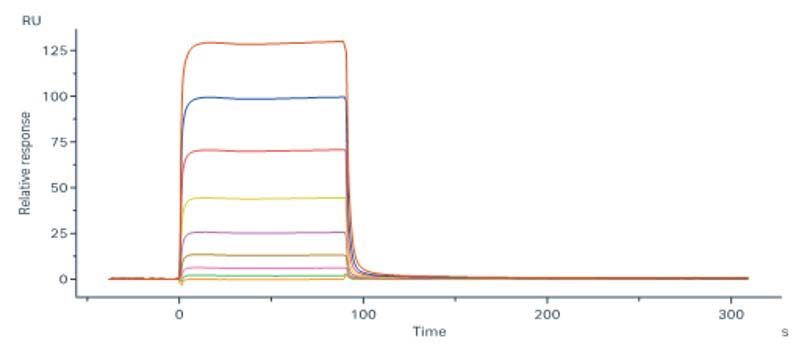
    Human GIPR Protein, Fc Tag (Cat. No. GIR-H5253) immobilized on CM5 Chip can bind GIP, human with an affinity constant of 184 μM as determined in a SPR assay (Biacore 8K) (QC tested).

    Protocol
  • Bioactivity-BLI

     GIPR BLI

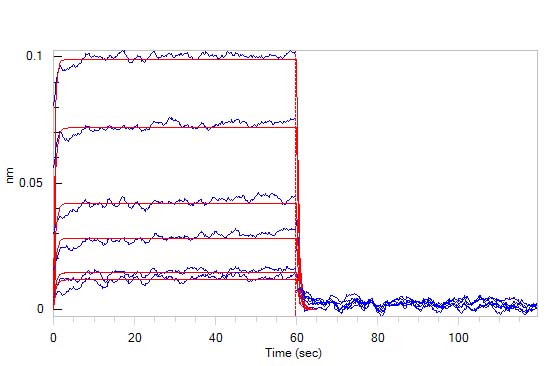
    Loaded Human GIPR Protein, Fc Tag (Cat. No. GIR-H5253) on Protein A Biosensor, can bind GIP, human with an affinity constant of 64 μM as determined in BLI assay (ForteBio Octet Red96e) (Routinely tested).

    Protocol

Customer Reviews
Writing Reviews

FAQ

  • product

    Can lyophilized proteins remain stable during room-temperature shipping or temporary room-temperature exposure?

    In general, lyophilized proteins remain stable during room-temperature shipping or temporary exposure to room-temperature conditions.


    Many ACROBiosystems recombinant proteins are supplied in lyophilized (freeze-dried) form. The lyophilization process effectively removes moisture from the product, helping reduce degradation-related reactions and improve protein stability during transportation and storage.


    To evaluate the stability of lyophilized proteins under normal temperature conditions, ACROBiosystems conducted a stability study on 11 representative lyophilized protein products at 37°C. The study demonstrated that these proteins maintained good quality stability after storage at 37°C for approximately 20 days. Based on these validation results, temporary room-temperature exposure during shipping or handling is generally not expected to have a significant impact on product quality or downstream application performance.


    To ensure optimal long-term stability, products should be stored according to the storage conditions specified in the product Certificate of Analysis (COA) upon receipt.


    Supporting Document


Background

This gene encodes a G-protein coupled receptor for gastric inhibitory polypeptide (GIP), which was originally identified as an activity in gut extracts that inhibited gastric acid secretion and gastrin release, but subsequently was demonstrated to stimulate insulin release in the presence of elevated glucose. Mice lacking this gene exhibit higher blood glucose levels with impaired initial insulin response after oral glucose load. Defect in this gene thus may contribute to the pathogenesis of diabetes. [provided by RefSeq, Oct 2011]

Recent Advances

 
Contact Us
Drug Candidate Licensing
More
  • Basic Product Information
  • Product Details
  • Customers Also Viewed
  • Performance Data
  • Customer Reviews
  • FAQ
  • Background
Contact Us

[North America]: +1 800-810-0816
[Switzerland]: +41 800 040 012
[Asia & Pacific]: +86 400-682-2521

[North America]: 1 Innovation Way, Newark, DE 19711, USA
[Switzerland]: ACRObiosystems AG, c/o Zug Dammstrasse Centre AG, Dammstrasse 19, 6300 Zug Switzerland