

Human HGF R / c-MET Protein, His Tag

AIDD‑Ready
Cat. No. / Size
Price
Availability
Qty
MET-H5227AI-250ug
$750.00
In Stock - Delivery in 2-3 weeks
MET-H5227AI-500ug (250ug X 2)
$1,200.00
MET-H5227AI
Sub-Total :
$ 0
0
Add to Cart
Customize Product Request Quote
Contact Us
Contact Us
Sub-Total:
$ 0
0
Add to Cart
  • Product Details
  • Performance Data
  • Reviews & Citations
  • Important Statement
  • Resources
Application

Human HGF R Protein, His Tag AIDD-Ready protein is designed for direct use in SPR assays. It is supplied in a sugar-free, glycerol-free formulation to eliminate refractive index interference in SPR. No desalting or buffer exchange is required before use, simplifying the SPR workflow and supporting high-throughput experimental validation to accelerate the transition from AI prediction to wet-lab validation.

Features and Advantages
  • Directly compatible with SPR: No desalting or buffer exchange required; supplied as a liquid to reduce sample preparation and improve experimental efficiency.
  • High batch-to-batch consistency: Each lot is released using SPR QC to ensure experimental reproducibility.
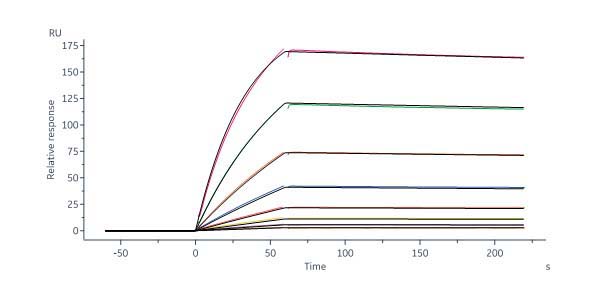
  • Validated with representative drugs: SPR binding activity is validated using representative drug antibodies to ensure suitability for drug screening and evaluation.
Synonyms

MET, AUTS9, HGFR, RCCP2, c-Met

Source

Human HGF R Protein, His Tag (MET-H5227AI) is expressed from human 293 cells (HEK293). It contains AA Glu 25 - Thr 932 (Accession # P08581-1).

Predicted N-terminus: Glu 25

Molecular Characterization

This protein carries a polyhistidine tag at the C-terminus.

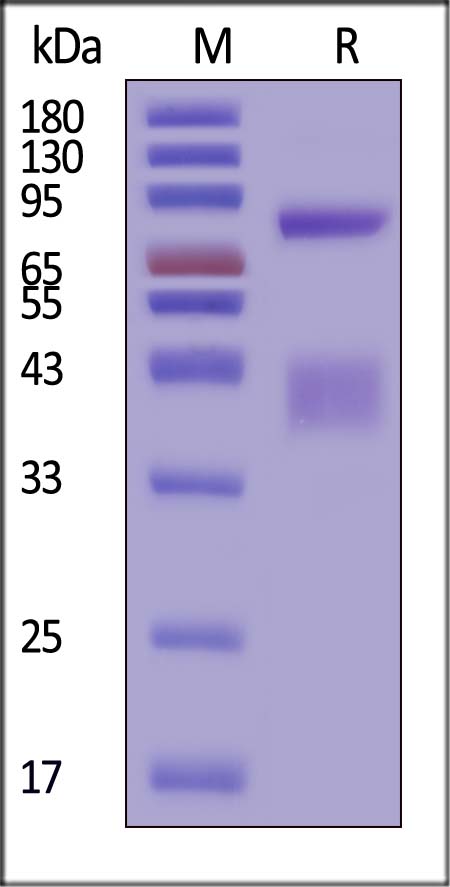
The protein has a calculated MW of 102.7 kDa. The protein migrates as 33-43 kDa and 65-80 kDa when calibrated against Star Ribbon Pre-stained Protein Marker under reducing (R) condition (SDS-PAGE) due to glycosylation.

Purity

>90% as determined by SDS-PAGE.

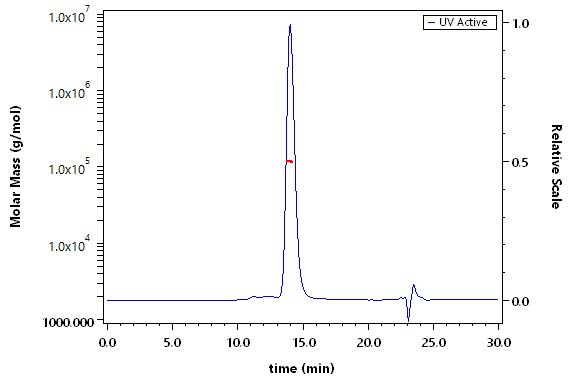
>90% as determined by SEC-MALS.

Formulation

Formulated in a proprietary trehalose-free buffer, supplied ready-to-use for SPR/BLI analysis - no buffer exchange required.

For detailed formulation, please refer to the batch-specific COA.

Shipping and Storage

This product is supplied and shipped on dry ice.

Please avoid repeated freeze-thaw cycles.

This product is stable after storage at:
  • The product MUST be stored at -70°C or lower upon receipt;
  • -70°C for 12 months under sterile conditions.

Background

Hepatocyte growth factor receptor (HGFR) is also known as mesenchymal-epithelial transition factor (MET), c-Met, and is a glycosylated receptor tyrosine kinase that plays a central role in epithelial morphogenesis and cancer development. HGFR protein possesses tyrosine-kinase activity. The primary single chain precursor protein is post-translationally cleaved to produce the alpha and beta subunits, which are disulfide linked to form the mature receptor. HGFR is normally expressed by cells of epithelial origin, while expression of HGF is restricted to cells of mesenchymal origin. Upon HGF stimulation, HGFR induces several biological responses that collectively give rise to a program known as invasive growth. Abnormal HGFR activation in cancer correlates with poor prognosis, where aberrantly active HGFR triggers tumor growth, formation of new blood vessels (angiogenesis) that supply the tumor with nutrients, and cancer spread to other organs (metastasis). HGFR is deregulated in many types of human malignancies, including cancers of kidney, liver, stomach, breast, and brain. Normally, only stem cells and progenitor cells express HGFR, However, cancer stem cells are thought to hijack the ability of normal stem cells to express HGFR, and thus become the cause of cancer persistence and spread to other sites in the body. Various mutations in the HGFR gene are associated with papillary renal carcinoma. HGFR mediates a complex program known as invasive growth. Activation of HGFR triggers mitogenesis, and morphogenesis.