

Biotinylated Cynomolgus PCSK9 Protein, His,Avitag™ (MALS verified)

Customer Reviews
Cat. No. / Size
Price
Qty
PC9-C82E3-25ug
$360.00
PC9-C82E3-200ug
$1565.00
ETA of in-stock products:2 business days

Product Details

  • Synonyms

    PCSK9, FH3, HCHOLA3, LDLCQ1, NARC1, PC9

  • Source

    Biotinylated Cynomolgus PCSK9 Protein, His,Avitag (PC9-C82E3) is expressed from human 293 cells (HEK293). It contains AA Gln 31 - Gln 692 (Accession # A8T666).

    Predicted N-terminus: Gln 31

    Request for sequence
  • Molecular Characterization

    PCSK9 Structure

    Other Tags and Version Biotin & Other Labeled Version

    This protein carries a polyhistidine tag at the C-terminus, followed by an Avi tag (Avitag™).

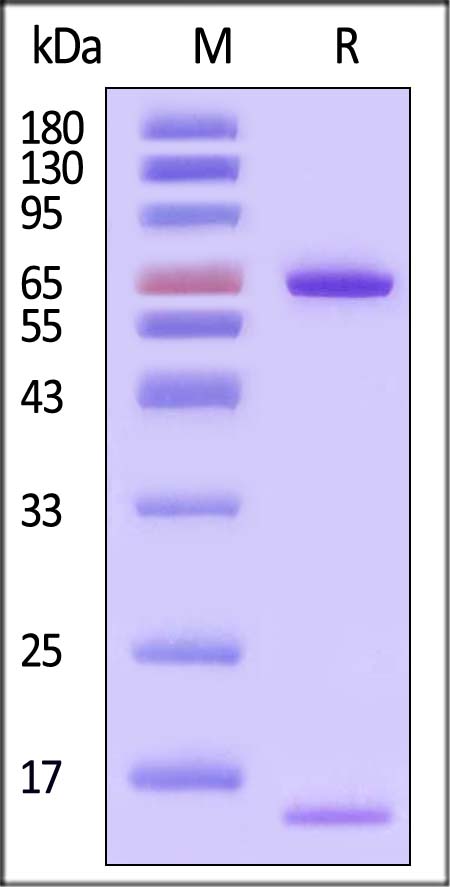
    The protein has a calculated MW of 75.1 kDa. The protein migrates as 15 kDa and 65-75 kDa when calibrated against Star Ribbon Pre-stained Protein Marker under reducing (R) condition (SDS-PAGE).

  • Labeling

    Biotinylation of this product is performed using Avitag™ technology. Briefly, the single lysine residue in the Avitag is enzymatically labeled with biotin.

  • Protein Ratio

    Passed as determined by the HABA assay / binding ELISA.

  • Endotoxin

    Less than 1.0 EU per μg by the LAL method / rFC method.

  • Purity

    >95% as determined by SDS-PAGE.

    >90% as determined by SEC-MALS.

  • Formulation

    Lyophilized from 0.22 μm filtered solution in PBS, pH7.4 with trehalose as protectant.

    Contact us for customized product form or formulation.

  • Reconstitution

    Please see Certificate of Analysis for specific instructions.

    For best performance, we strongly recommend you to follow the reconstitution protocol provided in the CoA.

  • Storage

    For long term storage, the product should be stored at lyophilized state at -20°C or lower.

    Please avoid repeated freeze-thaw cycles.
    This product is stable after storage at:

    1. -20°C to -70°C for 12 months in lyophilized state;
    2. -70°C for 3 months under sterile conditions after reconstitution.
  • ACRO Quality Management System

    1. QMS(ISO, GMP)
    2. Quality Advantages
    3. Quality Control Process

Customers Also Viewed

Performance Data

  • SDS-PAGE

    PCSK9 SDS-PAGE

    Biotinylated Cynomolgus PCSK9 Protein, His,Avitag on SDS-PAGE under reducing (R) condition. The gel was stained with Coomassie Blue. The purity of the protein is greater than 95% (With Star Ribbon Pre-stained Protein Marker).

  • SEC-MALS

    PCSK9 SEC-MALS

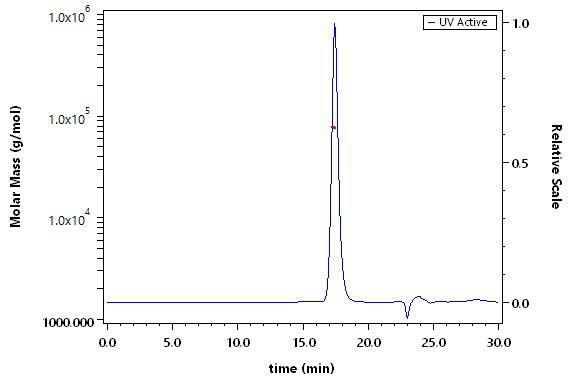
    The purity of Biotinylated Cynomolgus PCSK9 Protein, His,Avitag (Cat. No. PC9-C82E3) is more than 90% and the molecular weight of this protein is around 73-95 kDa verified by SEC-MALS.

    Report
  • Bioactivity-ELISA

     PCSK9 ELISA

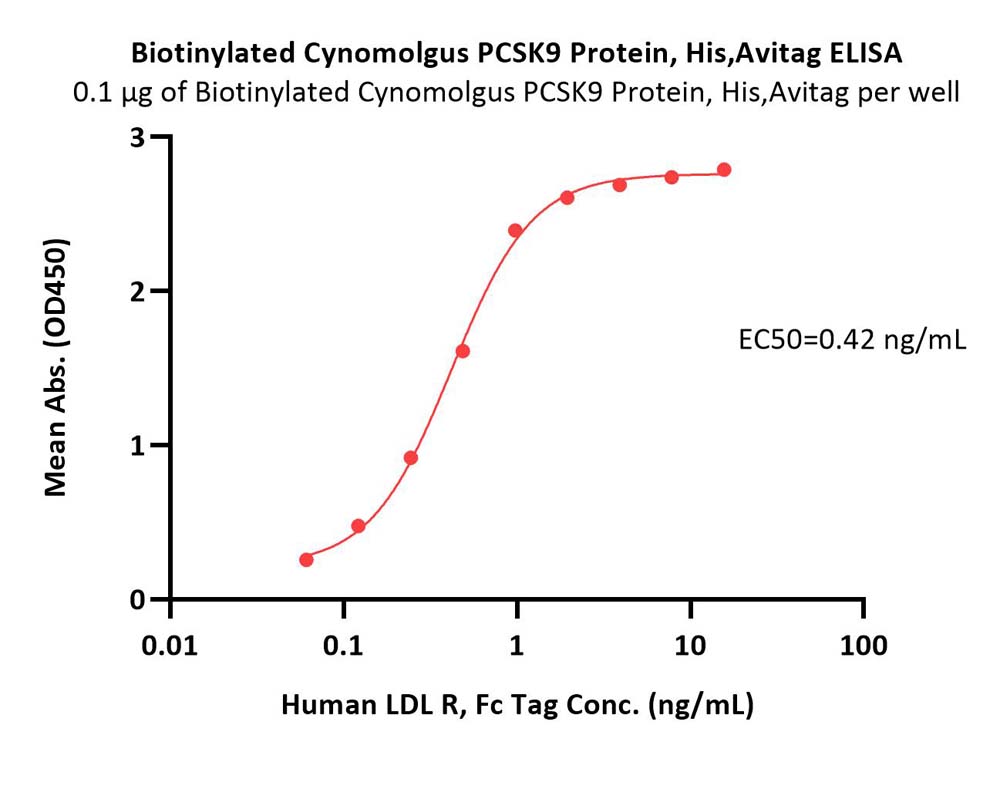
    Immobilized Biotinylated Cynomolgus PCSK9 Protein, His,Avitag (Cat. No. PC9-C82E3) at 1 μg/mL (100 μL/well) on streptavidin (Cat. No. STN-N5116) precoated (0.5 μg/well) plate can bind Human LDL R, Fc Tag (Cat. No. LDR-H5251) with a linear range of 0.06-1 ng/mL (QC tested).

    Protocol
  •  PCSK9 ELISA

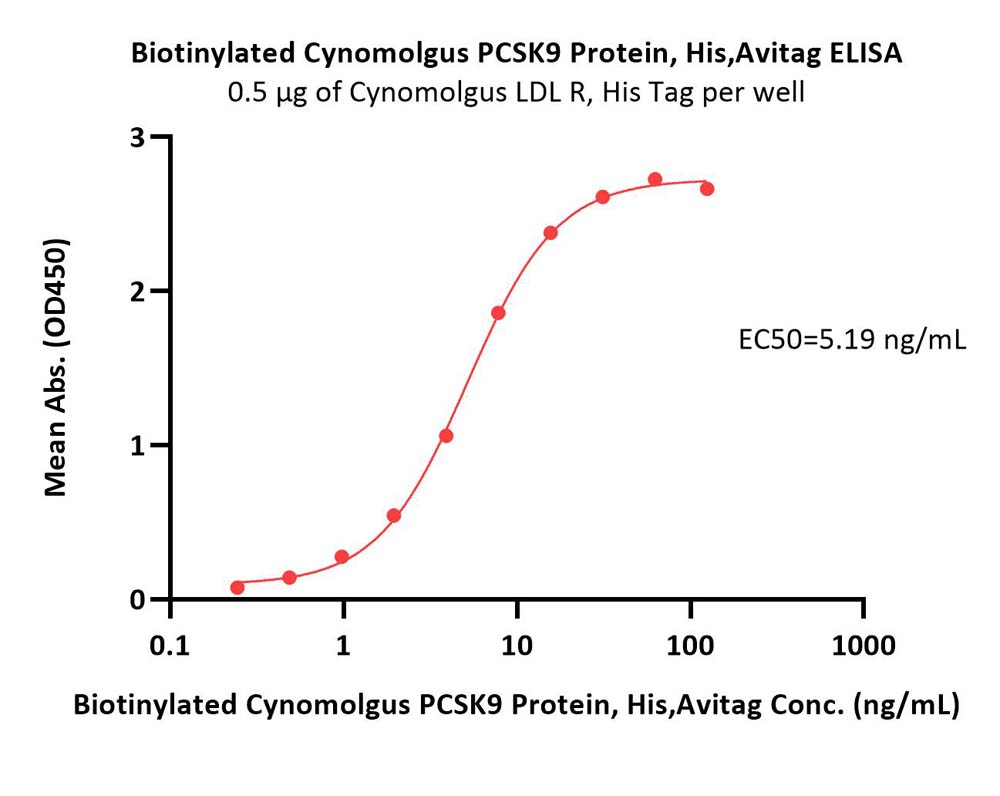
    Immobilized Cynomolgus LDL R, His Tag (Cat. No. LDR-C5222) at 5 μg/mL (100 μL/well) can bind Biotinylated Cynomolgus PCSK9 Protein, His,Avitag (Cat. No. PC9-C82E3) with a linear range of 0.2-16 ng/mL (Routinely tested).

    Protocol

Customer Reviews
Writing Reviews

Background

Proprotein convertase subtilisin/kexin type 9 (PCSK9) is also known as RC1 (neural apoptosis regulated convertase), is a newly identified subtilase belonging to the peptidase S8 subfamily. Mouse PCSK9 is synthesized as a soluble zymogen, and undergoes autocatalytic intramolecular processing in the endoplasmic reticulum, resulting in the cleavage of its propeptide that remains associated with the secreted active enzyme with a broad alkaline pH optimum. This protein plays a major regulatory role in cholesterol homeostasis. PCSK9 binds to the epidermal growth factor-like repeat A (EGF-A) domain of the low-density lipoprotein receptor (LDLR), inducing LDLR degradation. PCSK9 may also have a role in the differentiation of cortical neurons. Mutations in this gene have been associated with a rare form of autosomal dominant familial hypercholesterolemia (HCHOLA3).

Recent Advances

 
Drug Development Progress
  • English Name:

    Proprotein convertase subtilisin kexin type 9

  • Category:

  • Approved Drugs:

    8 Details

  • Drugs in Clinical Trials:

    35 Details

  • Highest Development Stage:

    Approved

Contact Us
Drug Candidate Licensing
More
  • Basic Product Information
  • Product Details
  • Customers Also Viewed
  • Performance Data
  • Customer Reviews
  • Background
Contact Us

[North America]: +1 800-810-0816
[Switzerland]: +41 800 040 012
[Asia & Pacific]: +86 400-682-2521

[North America]: 1 Innovation Way, Newark, DE 19711, USA
[Switzerland]: ACRObiosystems AG, c/o Zug Dammstrasse Centre AG, Dammstrasse 19, 6300 Zug Switzerland