Jul 13, 2026
 Page Views:2082


The Growing Need for Curative Therapies in Diabetes
Diabetes remains one of the fastest-growing global health challenges. According to the International Diabetes Federation, more than 537 million adults worldwide are living with diabetes, and this number is expected to exceed 643 million by 2030.
Type 1 diabetes (T1D) results from autoimmune destruction of pancreatic β-cells, leading to lifelong insulin dependence. Type 2 diabetes (T2D), accounting for approximately 90–95% of cases, is characterized by insulin resistance and progressive β-cell dysfunction. Although insulin therapy and glucose-lowering medications can effectively manage blood sugar levels, they do not address the underlying loss of functional insulin-producing cells.
As a result, researchers and biotechnology companies are increasingly exploring regenerative medicine and stem cell-based therapies as potential curative approaches for diabetes.
iPSC-Derived Islet Cells Transforming Diabetes Treatment
Induced pluripotent stem cells (iPSCs) have emerged as a promising cell source for diabetes therapy due to their unlimited self-renewal capacity and ability to differentiate into virtually any cell type.
Recent advances have enabled scientists to generate stem cell-derived islets (SC-islets) capable of producing insulin and restoring glucose regulation. These engineered islet cells offer the potential to replace damaged pancreatic β-cells and provide long-term glycemic control.
One of the most notable examples is Vertex Pharmaceuticals' investigational therapy VX-880 (Zimislecel). Clinical studies have demonstrated substantial reductions in exogenous insulin requirements and improved glycemic control in patients with Type 1 diabetes. Supported by FDA RMAT and Fast Track designations as well as EMA PRIME status, VX-880 has advanced into Phase III clinical development and represents a significant milestone in the field of diabetes cell therapy.
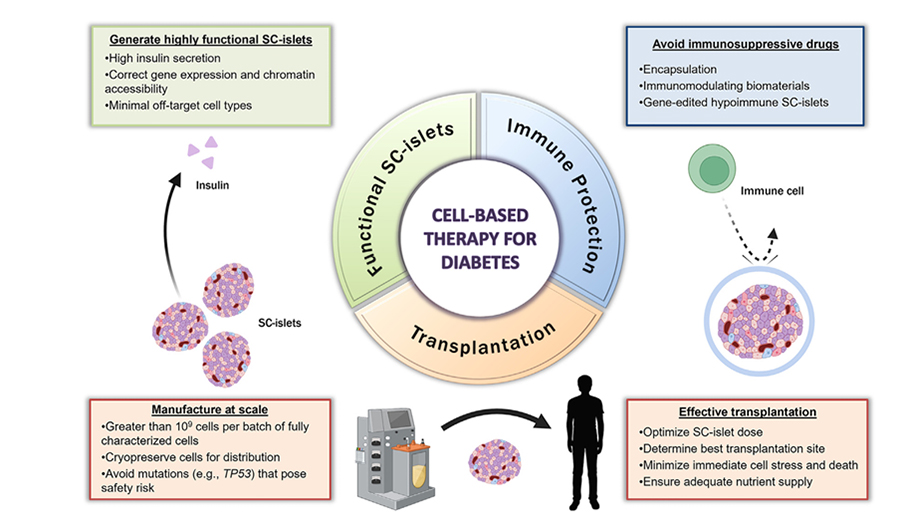
Figure 1. Key pillars of a successful SC-islet therapy for treating T1D
Key Challenges in iPSC-Based Islet Cell Therapy
Despite encouraging clinical progress, several challenges continue to hinder large-scale commercialization of iPSC-derived islet therapies.
Immune Rejection and Cell Survival
Transplanted stem cell-derived islets can be recognized as foreign by the recipient's immune system, leading to immune-mediated rejection. Although immunosuppressive drugs can improve graft survival, long-term use increases the risk of infection, organ toxicity, and malignancy.
Gene-editing technologies are being explored to reduce cellular immunogenicity and improve immune compatibility. However, concerns regarding off-target effects, genomic stability, and regulatory compliance remain important considerations.
Manufacturing Scalability and Cost
Another major challenge is the large-scale production of high-quality, functional islet cells.
Differentiation of iPSCs into pancreatic islets requires precise control of multiple developmental stages. Small variations in growth factor activity, media composition, temperature, or culture conditions can significantly affect differentiation efficiency and batch consistency.
To support commercial manufacturing, developers need robust, reproducible, and cost-effective raw materials that meet GMP standards while maintaining high differentiation performance.
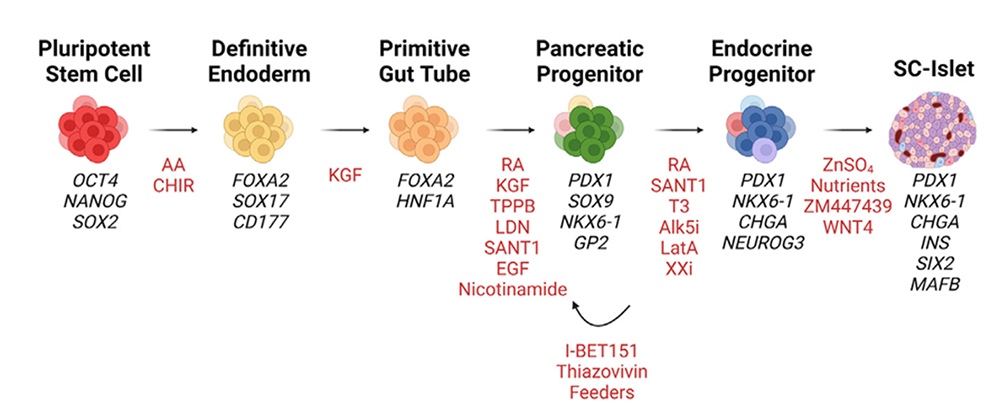
Figure 2. Manufacturing process for during the multistage differentiation of hPSCs to SC-islets.2023.Cell Stem Cell. Developments in stem cell-derived islet replacement therapy for treating type 1 diabetes
GMP Growth Factors Drive Efficient iPSC-to-Islet Differentiation
Growth factors play critical roles throughout the differentiation process, guiding stem cells through definitive endoderm, pancreatic progenitor, and mature endocrine cell stages.
Among these factors, Activin A and Keratinocyte Growth Factor (KGF) are widely recognized as essential components for successful pancreatic differentiation.
GMP Activin A for Definitive Endoderm Induction
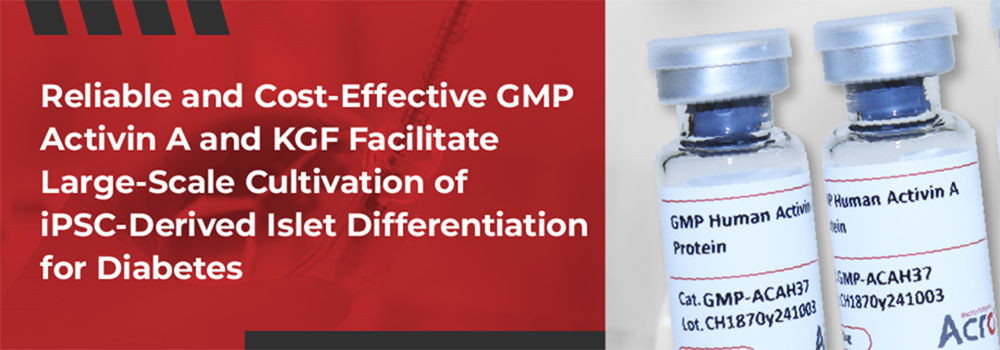
Activin A (Cat. No. GMP-ACAH37 & ACA-H5314) is a key signaling molecule used during early-stage differentiation to induce definitive endoderm formation, the first critical step toward pancreatic lineage commitment.
Available in both GMP Grade and Premium Grade (PG), our Activin A combines high biological activity with scalable manufacturing capabilities.
Key benefits include:
• Efficient induction of definitive endoderm differentiation
• Approximately 90% differentiation efficiency demonstrated in internal validation studies
• Cost-effective large-scale manufacturing suitable for commercial production
• Clinical-grade quality supporting translational and clinical programs
• Successfully utilized in stem cell therapy development projects, including iPSC-derived islet applications
Because Activin A is often required at gram-scale quantities during commercial manufacturing, optimizing its cost can significantly reduce overall production expenses.
KGF Supports Pancreatic Progenitor Differentiation
KGF (Cat. No. GMP-FG7H35 & FG7-H5318) plays an essential role in promoting the formation and expansion of pancreatic progenitor cells during mid-stage differentiation.
Our KGF is engineered to provide consistent biological activity and reproducible culture performance.
Key advantages include:
• Supports robust pancreatic lineage specification
• Achieves up to 95% differentiation efficiency into pancreatic progenitor cells (PP2)
• High lot-to-lot consistency
• Suitable for process development and scale-up manufacturing
• Compatible with GMP-oriented cell therapy workflows
Together, Activin A and KGF help establish a highly efficient and reproducible differentiation platform for generating stem cell-derived islets at clinical and commercial scales.
A complete iPSC-to-mature-islet-cell differentiation model
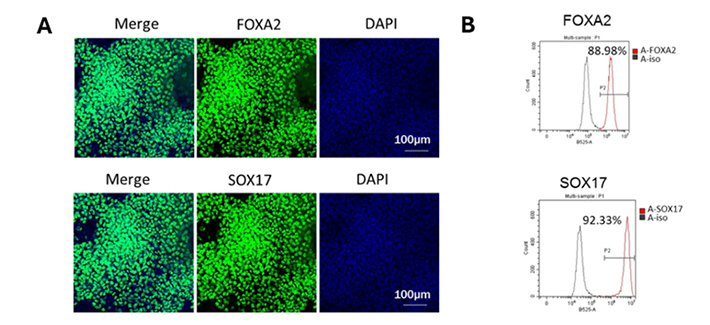
Step 1 -iPSC to DE Differentiation
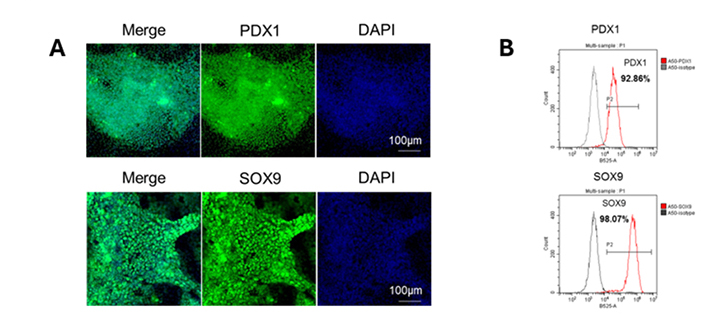
Step 2-iPSC to Pancreatic endoderm Differentiation
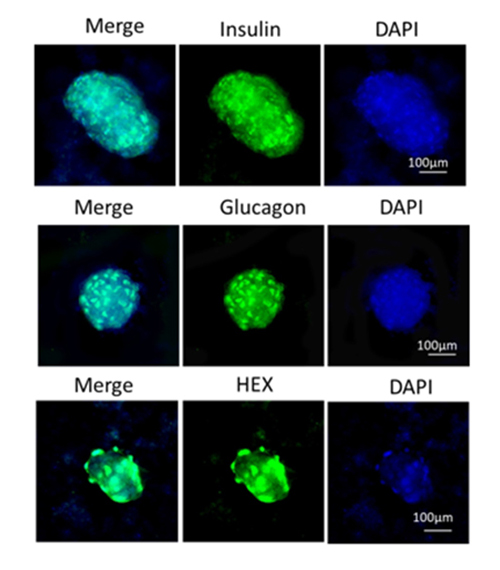
Step 3-iPSC to Mature Pancreatic Cell Differentiation
To support the rapidly growing field of regenerative medicine, we have developed a comprehensive portfolio of GMP-compliant cytokines, growth factors, and cell culture reagents for stem cell research and manufacturing.
Using optimized differentiation workflows, researchers can generate SC-islets containing balanced populations of:
• Insulin-producing β cells
• Glucagon-secreting α cells
• Glucagon-secreting α cells
This cellular composition more closely resembles native pancreatic islets and supports physiologically relevant glucose regulation.
As a globally trusted supplier of cell therapy raw materials, we provide regulatory-compliant products and customized technical support to help developers accelerate process development, clinical translation, and commercial manufacturing.
Conclusion
iPSC-derived islet cell therapy represents one of the most promising approaches for achieving functional cures for diabetes. However, overcoming challenges related to immune compatibility, manufacturing scalability, differentiation efficiency, and production costs remains essential for widespread clinical adoption.
High-quality GMP growth factors such as Activin A and KGF play a pivotal role in enabling robust and reproducible stem cell differentiation processes. By combining superior performance, regulatory compliance, and cost efficiency, these critical raw materials help bridge the gap between laboratory innovation and commercial-scale cell therapy manufacturing.
As the field continues to advance, reliable GMP reagents will remain fundamental to bringing next-generation diabetes therapies to patients worldwide.
Frequently Asked Questions (FAQ)
Q1: Why is Activin A important for iPSC-derived islet differentiation?
A: Activin A initiates definitive endoderm formation, the first and most critical step in directing iPSCs toward pancreatic cell lineages. High-quality Activin A significantly improves differentiation efficiency and process consistency.
Q2: What role does KGF play in pancreatic differentiation?
A: KGF promotes the development and expansion of pancreatic progenitor cells, which later mature into insulin-producing endocrine cells. Consistent KGF activity is essential for achieving high differentiation yields.
Q3: Why are GMP-grade growth factors important for clinical manufacturing?
A: GMP-grade growth factors provide validated quality, traceability, regulatory compliance, and lot-to-lot consistency. These attributes are critical for ensuring reproducible cell manufacturing processes and supporting clinical and commercial cell therapy production.
Recommended for you