Jul 13, 2026
 Page Views:196


Aβ-Positive ≠ Dementia: Resolving a Long-Standing Clinical Paradox
For decades, Alzheimer's disease (AD) research has focused on two pathological hallmarks: amyloid-β (Aβ) deposition and tau aggregation. According to the classical amyloid cascade hypothesis, Aβ accumulation represents the initiating event in AD pathogenesis, while the subsequent spread of pathological tau drives neuronal dysfunction, neurodegeneration, and cognitive decline.
Yet this framework does not fully explain a long-standing clinical paradox. Many individuals with substantial cerebral Aβ deposition remain cognitively normal throughout life, whereas others with comparable amyloid burden rapidly develop tau pathology and dementia. What determines whether Aβ pathology remains clinically silent or progresses to widespread tau propagation? Is there a critical biological switch linking Aβ deposition to tau pathology? Answering these questions has become one of the major frontiers in AD research.
Nature Medicine: A Functional Shift in Microglia May Mark the Turning Point
Microglia, the resident immune cells of the central nervous system, play essential roles in Aβ clearance, immune surveillance, and maintenance of brain homeostasis. Under physiological conditions, they help eliminate Aβ deposits and support neuronal health. As the pathological environment evolves, however, microglia gradually transition from a protective state toward a chronically activated, pro-inflammatory phenotype characterized by diminished phagocytic capacity and sustained inflammatory signaling.
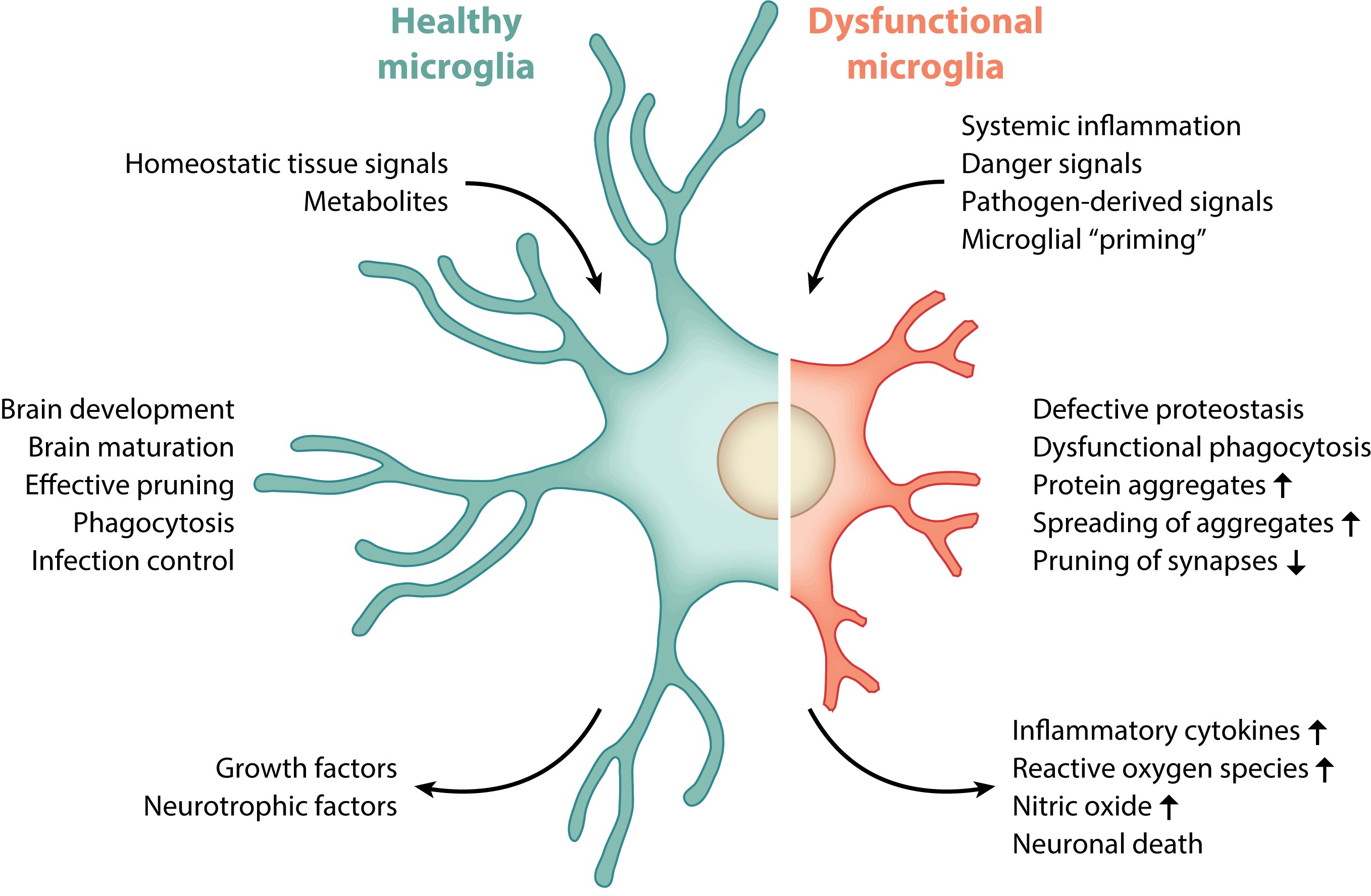
Source: https://doi.org/10.1146/annurev-med-050715-104343
Microglial function in homeostasis and dysfunction in neurodegeneration
A recent Nature Medicine study reframes our understanding of AD progression: Aβ burden alone does not dictate entry into rapid decline. Instead, the key factor associated with tau spread is a functional transition in microglial states.
By profiling brain tissues from octogenarians and centenarians via spatial transcriptomics and snRNA-seq, the team identified what they termed the "Aβ–Tau Inflection Point". At this juncture, microglia transition from the phagocytic Early plaque-induced state (Early PIG) to the antigen-presenting Late plaque-induced state (Late PIG), coinciding with accelerated tau accumulation, propagation, and neurodegeneration.
From Mechanism to Modeling: Tau PFFs as Pathological Seeds
Deciphering the mechanisms governing the Aβ–Tau inflection point requires experimental tools capable of modeling pathological tau transmission with high fidelity. Tau pre-formed fibrils (PFFs) have become indispensable in this regard. By acting as "pathological seeds," Tau PFFs recapitulate the templated misfolding and aggregation of endogenous tau, enabling controlled studies of tau propagation in vitro and in vivo.
ACROBiosystems offers rigorously validated Tau PFF products that reliably induce tau pathology in cell lines and cerebral organoids, empowering researchers to investigate tau spreading mechanisms, microglial responses, and therapeutic interventions with enhanced reproducibility.
Cellular Validation: Efficient Induction of Endogenous Tau Aggregation
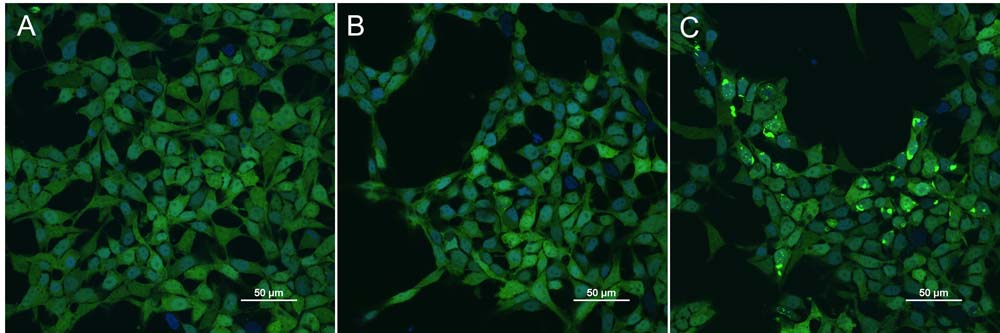
In HEK293/Human Tau (GFP) Stable Cell Lines (Cat. No. CHEK-ATP087), transfection with Human Tau-441 PFFs (Cat. No. TAU-H5115) triggered robust formation of GFP-Tau aggregates (Fig. C), whereas control treatments with lipofectamine or monomeric Tau-441 (Cat. No. TAU-H5117) showed diffuse cytoplasmic distribution (Fig. A, B).
Cerebral Organoid Validation: Multi-Dimensional AD-Like Pathophenotypes
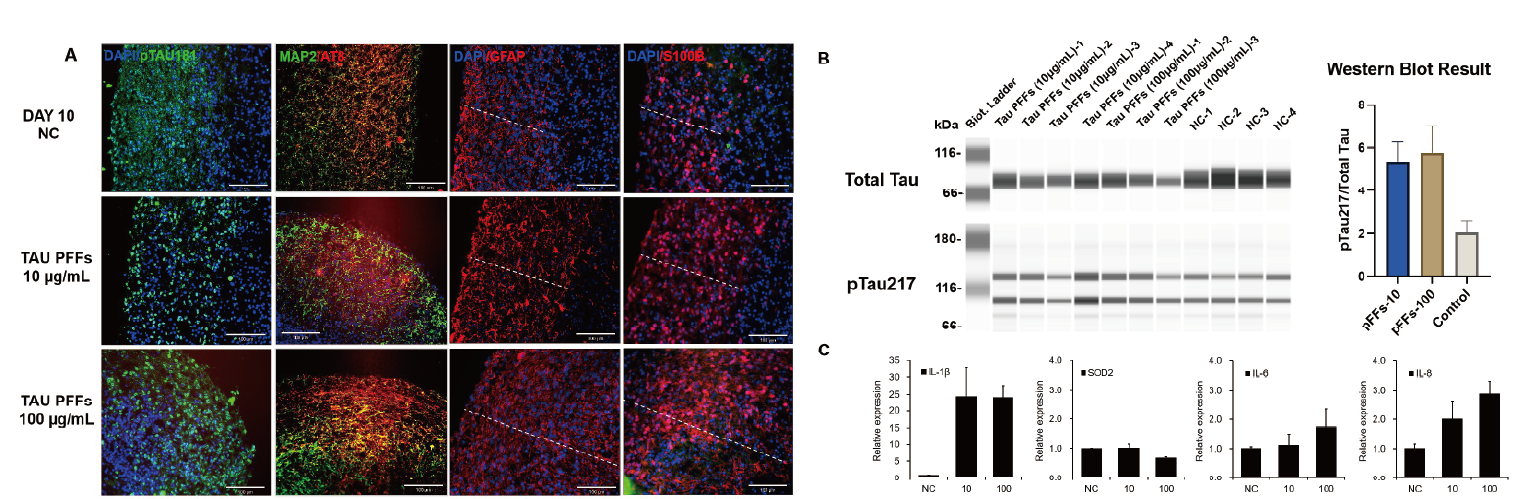
A. Tau PFFs (Cat. No. TAU-H5113) induce elevated p-Tau181 (Cat. No. PT1-Y2073) and astrocyte activation in cerebral organoids.
B. Tau PFFs (Cat. No. TAU-H5116) increase Tau phosphorylation at Thr217 (Cat. No. TAU-MY2102) in a dose-dependent manner.
C. Tau PFFs (Cat. No. TAU-H5116) dose-dependently upregulate IL-1β and IL-8, modestly elevate IL-6, and suppress SOD2, indicating that PFF treatment induces neuroinflammation and disrupts antioxidant balance.
Conclusion: Defending Before the Inflection Point
The microglial state transition beyond Aβ deposition may represent a critical "switch" in AD progression—a compelling explanation for the enigma of Aβ-positive cognitive resilience.
Aneuro, a neuroscience-focused brand under ACROBiosystems, provides an integrated portfolio spanning target proteins, PFFs, stable cell lines, and p-tau antibodies. Backed by a robust portfolio of high-quality research tools, Aneuro supports AD research from mechanistic discovery to therapeutic development.
FAQ
Q1: What is the Aβ–Tau Inflection Point?
A: The Aβ–Tau Inflection Point refers to the stage at which microglia transition from an early phagocytic state to a pro-inflammatory, antigen-presenting state. This functional shift is associated with accelerated tau propagation, neurodegeneration, and progression toward dementia.
Q2: Why do some Aβ-positive individuals never develop dementia?
A: Amyloid-β deposition alone does not necessarily lead to dementia. Recent studies suggest that the transition of microglia into a pro-inflammatory state may determine whether tau pathology spreads, influencing whether individuals remain cognitively resilient or progress to Alzheimer's disease.
Q3: What are Tau pre-formed fibrils (Tau PFFs)?
A: Tau pre-formed fibrils (Tau PFFs) are aggregated tau proteins that act as pathological seeds, inducing endogenous tau misfolding and aggregation. They are widely used to model tau propagation and neurodegenerative pathology in cell cultures and animal or organoid models.
Q4: Why are Tau PFFs important for Alzheimer's disease research?
A: Tau PFFs enable researchers to reproduce key pathological features of Alzheimer's disease, including tau aggregation, neuroinflammation, and neuronal dysfunction. They provide reliable experimental models for studying disease mechanisms and evaluating potential therapeutic strategies.
Q5: How do microglia contribute to Alzheimer's disease progression?
A: Microglia initially help clear amyloid-β and maintain brain homeostasis. During disease progression, however, they can transition into a chronically activated inflammatory state that promotes tau propagation, neurodegeneration, and cognitive decline.
References
1. Lu A, Chen W T, Dalby M, et al. Human microglial transitions at the Aβ–tau inflection point associate with divergent pathways to dementia and resilience[J]. Nature Medicine, 2026: 1-13. https://doi.org/10.1038/s41591-026-04393-8
2. Labzin L I, Heneka M T, Latz E. Innate immunity and neurodegeneration[J]. Annual review of medicine, 2018, 69: 437-449. https://doi.org/10.1146/annurev-med-050715-104343