

Cell-based Assay Verified Siglec-15 Protein

Siglec-15 is a member of the sialic acid-binding Ig-like lectin (Siglecs) family and is expressed in M2 macrophages, myeloid cells, dendritic cells, B cells, and osteoclasts. Siglec-15 can continuously inhibit the activity of T cells and exhibits the main features of normalized cancer immunotherapy. Related studies have shown that Siglec-15 is the major immunosuppressive factor in most PD-L1 negative tumor patients. And the anti-cancer effect of this target is likely to be mutually exclusive with PD-L1. In tumor cells, the expression level of siglec-15 is low when PD-L1 expression is high. For those cancer patients who are not effective in PD-1/PD-L1 treatment, Siglec-15 may bring them a new choice of immunotherapy.


High bioactivity Siglec-15 protein can help drugs development. The bioactivity of Siglec-15 protein developed by ACROBiosystems is verified by Cell based assay/BLI /SPR /ELISA, and the corresponding protocols are provided for free.

Assay Data

The bioactivity of Siglec-15 proteins are verified by Cell based assay/ BLI/ SPR/ ELISA, and the protocols are offered.

Cell based assay
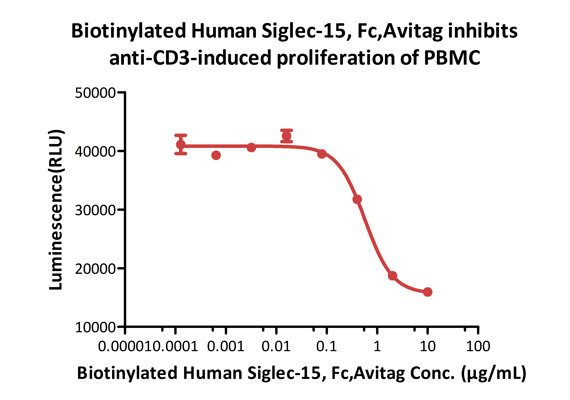
Cell based assay

Biotinylated Human Siglec-15, Fc,Avitag (Cat. No. SG5-H82F5) inhibits Anti-CD3-induced proliferation of PBMC. The ED50 for this effect is 0.48-0.57 μg/mL.

BLI
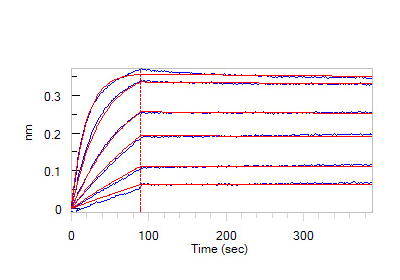
BLI

Loaded Anti-Siglec-15 MAb (Mouse IgG) on AMC Biosensor, can bind Human Siglec-15, Fc Tag (Cat. No. SG5-H5253) with an affinity constant of 59.7 pM as determined in BLI assay (ForteBio Octet Red96e).

SPR
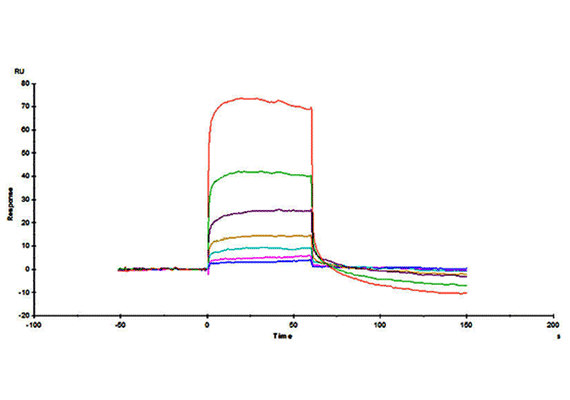
SPR

Immobilized Neu5Ac(a2-6)GalNAc-PAA-biotin on SA Chip can bind Human Siglec-15, Fc Tag (Cat. No. SG5-H5253) with an affinity constant of 4.49 μM as determined in a SPR assay (Biacore T200).

ELISA
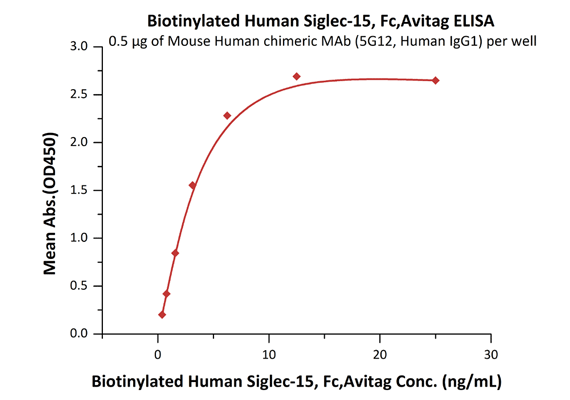
ELISA

Immobilized Mouse Human chimeric MAb (5G12, Human IgG1) at 5 μg/mL (100 μL/well) can bind Biotinylated Human Siglec-15, Fc,Avitag (Cat. No. SG5-H82F5) with a linear range of 0.4-3 ng/mL.

* If you would like ACRO to add more experimental design and application data of Siglec-15 protein, please contact us.
* If you want more Siglec proteins, please click the molecule name below to find more.

FAQ

Q

Why should anti-Siglec-15 screening combine target binding, ligand-blocking potential, and cellular function?

Binding to recombinant Siglec-15 confirms target recognition but does not establish functional blockade. A strong candidate should be assessed for its ability to interfere with the relevant Siglec-15 ligand interaction and to reverse Siglec-15-associated immune suppression in a cellular model. The page presents antibody-binding and PBMC-based functional validation for representative products; glycan-competition or ligand-blocking studies should be added when supported by the selected product and mechanism.
Q

How should Siglec-15 protein formats be selected for immunization, ELISA, SPR, BLI, and antibody screening?

His-tagged proteins support anti-His capture and many immunization or binding workflows, while Fc fusions enable Protein A/G capture but can introduce avidity or Fc-detection interference. Site-specifically biotinylated formats provide controlled immobilization on streptavidin surfaces. When screening human IgG antibodies, a human Fc-tagged target may complicate detection, so a differentiated tag format can be preferable. The final choice should match both the immobilization method and the detection reagents.
Q

Why are glycosylation, molecular homogeneity, and conformational activity important for Siglec-15 screening?

Siglec-15 is a glycosylated extracellular lectin, so folding and glycosylation can influence glycan recognition and antibody epitope presentation. Aggregates or heterogeneous species may produce nonspecific binding and artificial avidity. For a specific recombinant construct, SDS-PAGE, SEC-MALS, and functional binding data can jointly support suitability. A dimeric state reported for one engineered product should be interpreted as a property of that construct, not automatically as the native membrane organization of Siglec-15.
Q

Why should human and nonhuman-primate Siglec-15 proteins be compared during therapeutic development?

Small sequence differences near an antibody epitope can alter binding even when overall homology is high. Comparing human and relevant nonhuman-primate Siglec-15 proteins helps determine whether a candidate can be evaluated in a pharmacology or toxicology species. Recombinant-protein binding is an efficient early screen, but it should be followed by cell-surface binding and functional confirmation because expression level and membrane context also affect apparent activity.
Q

What does the dual role of Siglec-15 in tumor immune suppression and osteoclast differentiation mean for drug development?

Siglec-15 is linked to suppression of T-cell responses and to DAP12-associated osteoclast differentiation and bone remodeling. Its therapeutic relevance may therefore extend beyond general tumor immunity to cancers involving bone or abnormal osteoclast activity. The functional package should match the indication: immune-oncology programs may prioritize T-cell or myeloid-cell assays, whereas bone-focused programs should also examine osteoclast differentiation and resorption. Recombinant protein supports screening, but it cannot replace these cellular models.
  • Background
  • Product List
  • Assay Data
  • FAQ





